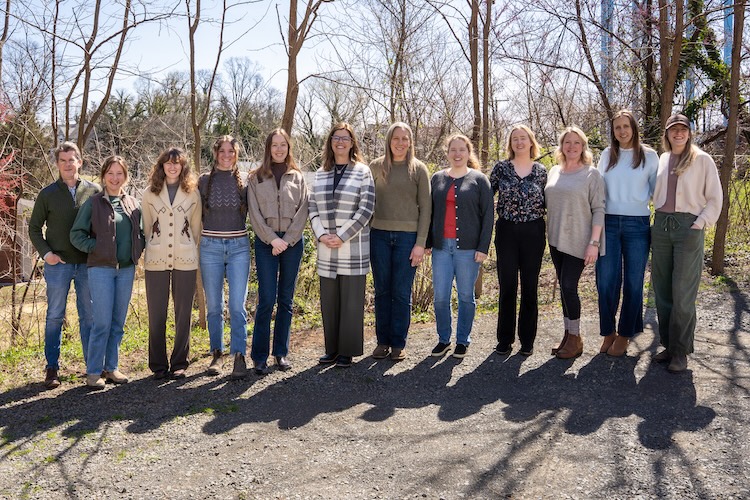
At the heart of The Piedmont Environmental Council’s efforts to protect and restore the lands and waters of the Virginia Piedmont is our dedicated conservation team.
Their work is integrated and interrelated, and each member of the team wears many hats. But central to all of it is listening to the broad experiences, opinions and motivations of the landowners and community members in the Virginia Piedmont. Conservation Program Manager Kim Biasiolli especially enjoys “meeting with landowners and hearing their stories” — a sentiment echoed by all of our conservation team members. “Often there is a deep rootedness and connection to the land, and it feels very rewarding to be able to help them protect it forever.”
You’ve likely met some of our conservation staff somewhere in your community (whether you knew it or not!), but few people know the tremendous work they do behind the scenes.
Years in the Making, Generations of Impact: Conservation Easements
When landowners place their property under a conservation easement, they limit future development on that property for the benefit of current and future generations. And behind every conservation easement is years of intensive work.
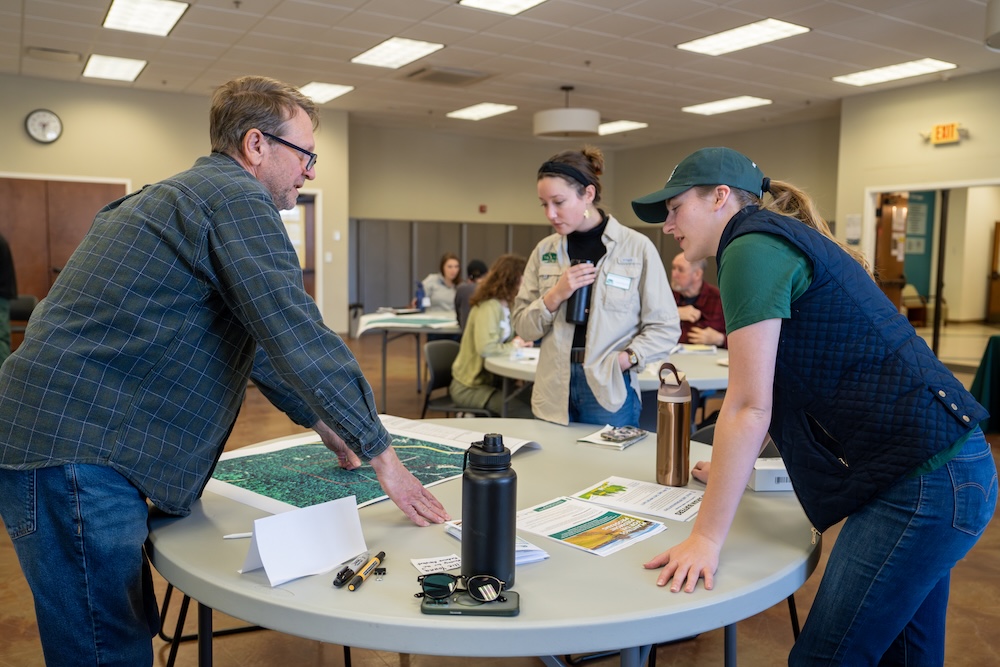
Sometimes landowners come to PEC already knowing they want to conserve their land — as with Rappahannock-Rapidan Conservation Program Manager Bryn Sonnett’s recent collaboration with the Willis family to conserve Hilton Farm in Orange County. Other times, our team strategically identifies conservation priorities and approaches landowners — as with Kim’s work on the Shenandoah Borderlands Conservation Initiative in Albemarle and Greene Counties. Either way, every easement starts with “sitting down and listening to what people are saying and learning what conservation means to them and how we can help them achieve it,” says Director of Conservation Mike Kane.
Next comes multiple site visits to photograph and map the property and to identify and quantify its “conservation values”: things like the quality of the soil; how many miles of waterways run through the property; how much forest, working farmland or scenic open space covers the property; or what types of wildlife habitat the property holds.
Easements also come with elements typical of any real estate transaction — appraisals, closing costs, title searches, legal fees and so on. Mike, Kim and Bryn, along with Conservation Field Representatives Keely Murphy and Emily Stern, facilitate all of these, often writing applications for grants to help landowners with their costs. Along the way, they’re also connecting a web of related organizations and agencies that partner with PEC and the landowner to bring the easement to fruition. By the time an easement is complete, our team might have had dozens of meetings, filed hundreds of pages of documents and traveled countless miles between site visits and county offices.
Stewarding the Land: Easement Monitoring
Once a conservation easement is complete, a land trust like PEC “holds” that easement and is responsible for ensuring the land is cared for and maintained, or stewarded, in accordance with the terms of the easement. This is especially important when conserved properties change hands.
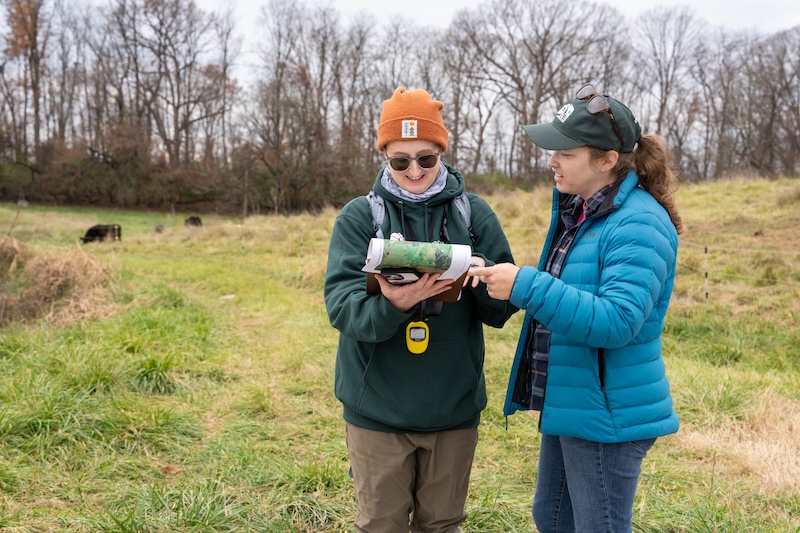
“Like diamonds, easement stewardship is forever,” says Stewardship Coordinator Michaela Weglinski. “We are responsible for making sure the conservation values of easement properties are upheld well beyond any of our lifetimes.”
Every year, at least two PEC staff — typically Michaela and Deputy Director of Conservation Valerie Peterson — personally visit, or “monitor,” over 100 properties, documenting the conservation values and uses of the property. They meet with landowners to answer any questions about the easement terms and to provide additional resources to support their goals for their land. Ultimately, Michaela says, easement monitoring is about supporting and collaborating with each landowner as part of a “larger conservation community.”
Restoring the Lands and Waters: Wildlife Habitat and Tree Plantings
That collaboration continues with the habitat restoration our team does throughout the region. “I spend most of my time at work with my boots on the ground!” says Wildlife Habitat Outreach Specialist Lauria McShane about her work on habitat restoration.
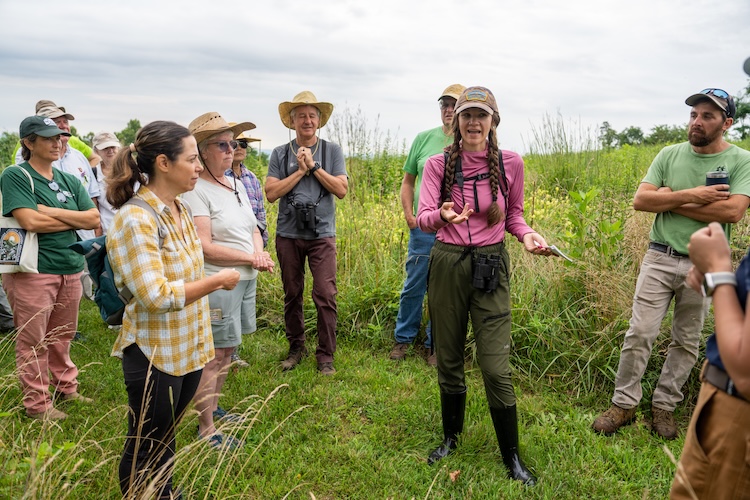
Lauria and Wildlife Habitat Program Manager October Greenfield coordinate the Virginia Grassland Bird Initiative (or VGBI), a program that pays farmers to adopt springtime haying and grazing practices that support the survival of nesting grassland bird species on working landscapes.
In the fall, they open the application period and encourage farmers to apply to enroll their farm in the program. Over the winter, they review applications with aerial satellite imagery and photos, and visit as many as 25 farms that might qualify to meet with landowners and farmers, map fields to determine acreage, and answer questions. Landowner agreements are signed in March, and the program runs from April 1 to July 1.
“If I’m not with a farmer in a field or a landowner looking over a map of their property, then I’m in the community doing public outreach at schools, community events and workshops,” says Lauria. All this work has protected essential habitat for countless nesting grassland birds: to date, VGBI has enrolled 3,600 acres of farmland and will add even more in the 2026 season.
. . .
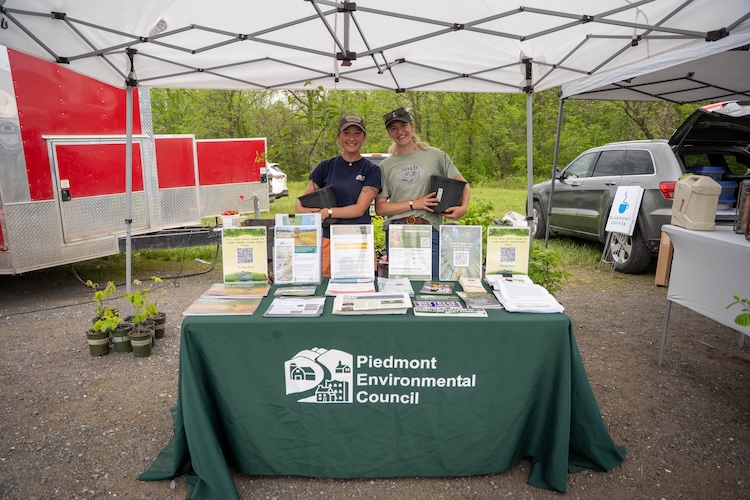
Plantings for the Piedmont Program Coordinator Linnea Sherman also follows a seasonal cycle in her work. She runs PEC’s Plantings for the Piedmont program, which helps landowners improve water quality in the Potomac and Rappahannock river watersheds with mass tree plantings along streams. Linnea and Plantings for the Piedmont Assistant Ellie Young coordinate nearly a dozen planting projects every spring and fall, each of which might include hundreds of individual plantings.
Meanwhile, behind the scenes, they write grant applications to secure the funding and plan out the plantings with landowners. They collaborate with partner organizations to source and buy hundreds of native trees and shrubs, and recruit and coordinate volunteers or contractors who plant the trees. Once the trees are in the ground, they follow up with technical assistance to ensure the trees survive. Last year, Linnea and Ellie facilitated the planting of 15,000 trees that will improve water quality and aquatic wildlife habitat for years to come.
The Connective Fiber: Outreach and Partnerships
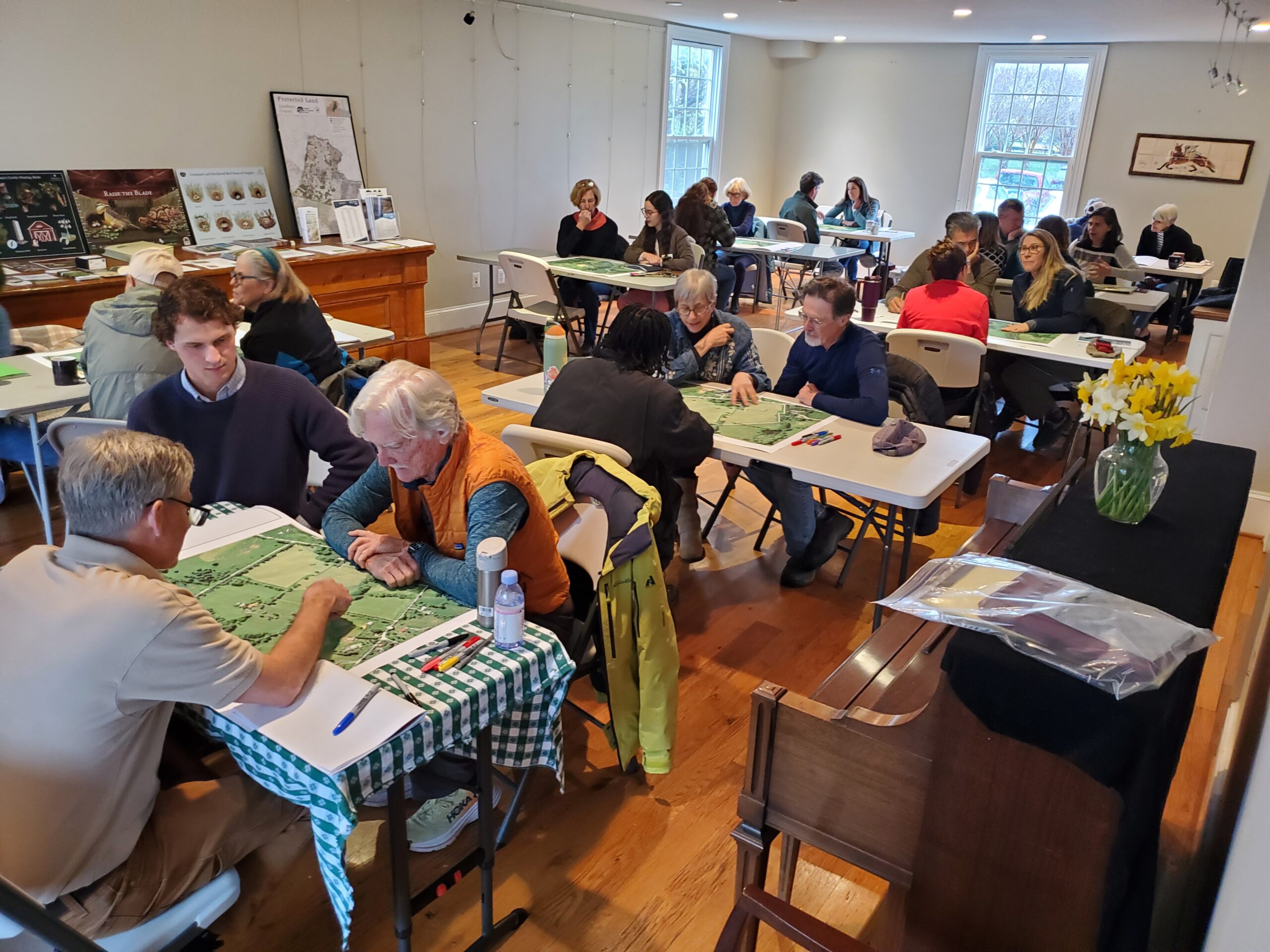
From birding walks to conservation “speed dating” workshops, PEC’s conservation staff host and present at over 100 public events throughout the year to connect people to the many ways they can support conservation in their own backyard.
“I love inspiring new conservationists of all ages and sharing that conservation practices don’t require big properties or complicated habitat restoration,” says October. “It can be as simple as installing nest boxes, planting a patch of native plants, or volunteering with PEC and other conservation organizations in your local community.”
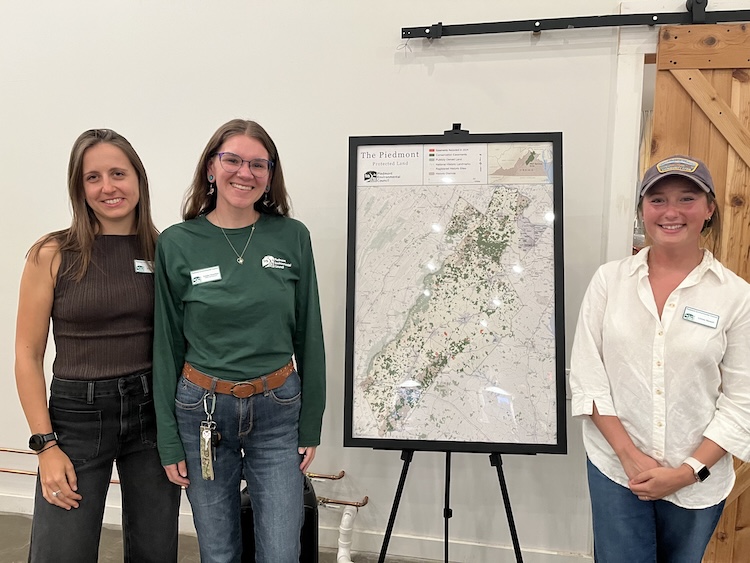
That commitment to connection extends to the team’s work with other organizations as well. Behind every conservation success story is usually a robust network of partnerships built on personal relationships. “Partnerships and collaboration are crucial in this work,” says Bryn.
Successful collaboration is why the Virginia Piedmont is a global model for land conservation and why programs like VGBI have become national and even international models for habitat restoration. It’s how PEC has become a thought leader in professional conservation spaces like Virginia’s United Land Trusts and the national Land Trust Alliance, and it’s what keeps staff pushing forward on new, innovative projects.
Reflecting on some exciting new easement opportunities in the works, Bryn says she is “looking forward to another great year of conservation.”
This article appeared in the 2026 spring edition of The Piedmont Environmental Council’s member newsletter, The Piedmont View. If you’d like to become a PEC member or renew your membership, please visit pecva.org/join.