
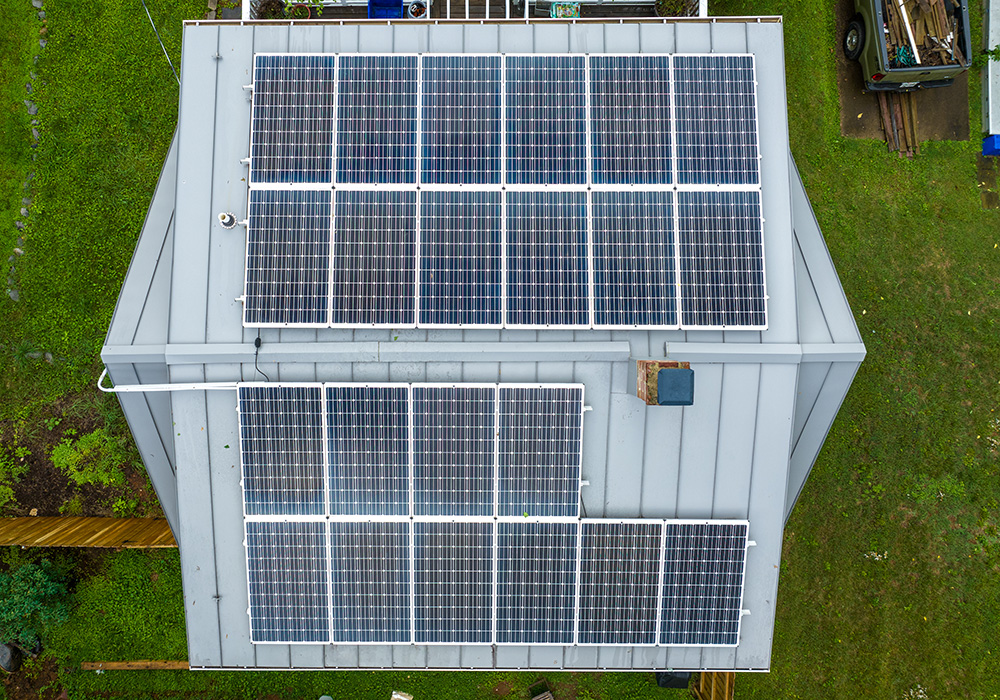

On Dec. 8, 2025, the Piedmont Environmental Council hosted and recorded a webinar on net metering – the fundamental billing structure that makes small-scale solar financially viable for homeowners, businesses and farmers – and Dominion Energy’s attempt to weaken it.
PEC’s Senior Energy & Climate Policy Advisor Ashish Kapoor spoke about the energy landscape, the benefits of small-scale solar, Dominion’s proposed changes to net metering that are currently the focus of a Virginia State Corporation Commission (SCC) case (read more below), and findings from our report, Value of Distributed Solar in Virginia: A Framework for Fair Net-Metering Compensation (2025), which demonstrates the true, comprehensive value of small-scale solar to every citizen—benefits that utilities often fail to acknowledge when proposing rate cuts.
Kapoor also talked about actions Virginia residents can take if they have concerns, including submitting written comments to the SCC asking it to keep the current net metering structure in place, and/or signing up to testify by phone at the public hearing on Jan. 20, 2026. The deadline for written comments is Tuesday, Jan. 13, 2026.
View the webinar recording
The Net Metering Fight
In the current case before the Virginia State Corporation Commission (SCC), Dominion Energy is proposing changes to net metering that would drastically cut the credits rooftop solar owners receive for the excess energy they send back to the grid. The current 1:1 net metering credit is the key to making rooftop solar “pay for itself” over time, providing significant long-term savings for you.
Small-scale, locally-produced energy—known as distributed generation—is key to a more sustainable, more reliable, and independent energy future for Virginians. Distributed generation helps to preserve prime agricultural and forested lands, connect clean energy to the grid quickly and close to where it’s needed, save homeowners and businesses tens of thousands of dollars on soaring electricity bills (caused by the massive energy demand from data centers), and increase personal energy independence, especially when coupled with battery storage.
At a time when Virginia imports more energy than any other state, electricity bills are escalating, and data center demand is straining our grid, we need sustainable, practical and cost-effective energy solutions more than ever. Dominion’s proposed regulatory changes will make the smaller-scale distributed generation approach—which people tend to like for its environmental and financial benefits—economically unviable.
Additional Resources:
Related: Video: Power and Produce: Virginia’s First Crop-Based Agrivoltaics Project