
This text was taken from an email alert sent out on October 16, 2025. Sign up for email alerts →
Dear Supporter,
As energy bills go up and fossil fuels are kept online, largely driven by data centers, PEC remains focused on shaping and advancing a clean energy future and energy independence for Virginia.
Increasing distributed generation in the Commonwealth is key to these priorities as it serves multiple purposes: it helps with our transition to more clean energy, while also preserving natural resources, decreasing overall power load on the grid, lessening the need and impacts of new transmission and generation infrastructure, connecting energy quickly to the grid at a time when we need it most and protecting consumers from rapidly escalating utility rates. And when battery backup is added to that mix, we gain personal energy independence and increase the value of virtual power plants.
Read on to learn more about our recently completed, first-of-its-kind in Virginia, agrivoltaics project at PEC’s Community Farm; the results of a PEC-commissioned study on the true value of smaller-scale solar; our efforts to ensure rooftop solar owners and other behind-the-meter solar users are able to maintain electricity bill savings in the face of a challenge by Dominion; and our upcoming efforts, both during the General Assembly and year-round, to increase distributed generation energy (i.e. solar on rooftops, parking lots, small-scale agrivoltaics, etc.) in Virginia.
PEC Advocating Against Dominion’s Proposed Cuts to Net Metering
Dominion Energy’s tremendous lobbying pressure has been a longstanding and powerful force against efforts to create a more distributed energy grid, because the utility company loses profits from distributed energy. And that’s why, in May 2025, Dominion petitioned the Virginia State Corporation Commission (SCC) to make regulatory changes to “net metering,” which is the fundamental structure that makes solar economically viable.
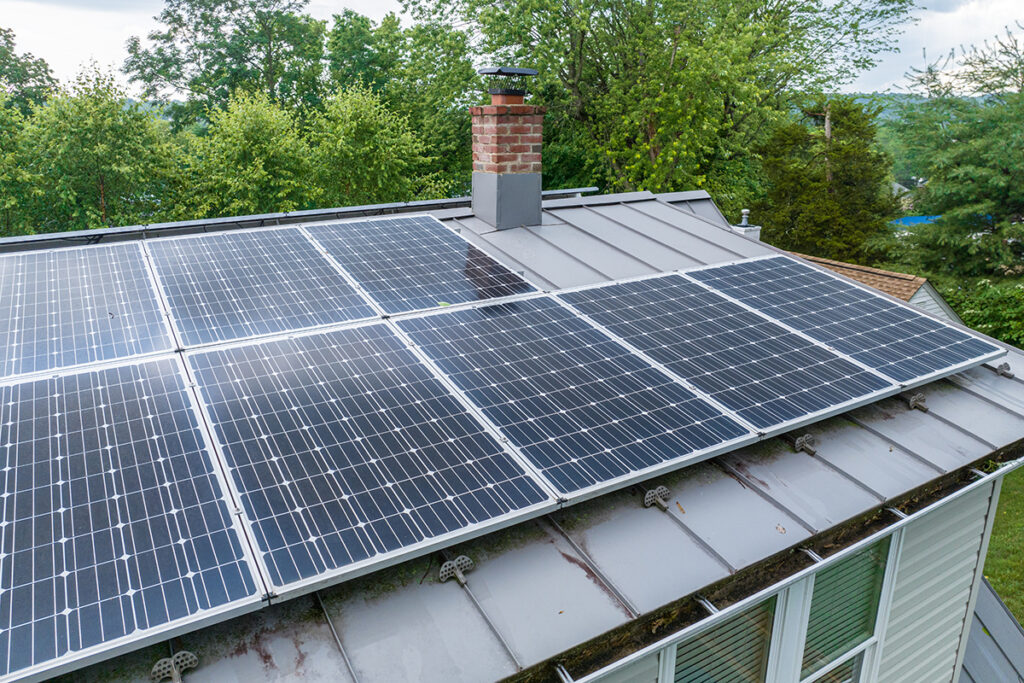
Net Metering is a billing arrangement whereby owners of rooftop and other small-scale solar receive a 1:1 credit for the excess energy their systems generate and send back to the grid. That credit is automatically applied to their bill at later times, such as at night or in winter months when their solar panels are less productive. This is how solar installations “pay for themselves” over time, and it’s what makes solar financially accessible to homeowners, farmers and small businesses. With this existing, fair arrangement in place, rooftop solar is built with the goal of meeting the owner’s annual needs, and this is the foundation for distributed generation.
But Dominion wants to cut that net metering value and severely undermine the benefit and practicality of all distributed generation — all at a time when we are importing more energy than any other state and are projected to need an additional 40-50 gigawatts to accommodate data center growth.
Later this year and in early 2026, Dominion’s case before the State Corporation Commission will provide a tremendous opportunity for you to provide public testimony. PEC is an intervenor in this case, posing questions and offering additional information that can be used in the SCC’s decision making. We encourage you to get involved now by providing public comment supporting the current net metering rate structure.
Report Finds Solar Far Exceeds Value Communicated by Dominion
PEC commissioned Dunsky Energy + Climate Advisors to study and calculate the actual value of distributed solar generation in Dominion Energy’s territory — factoring in the range of benefits (such as land conservation, connecting clean energy quickly and mitigating new transmission and generation impacts) that the utility has not accounted for in its proposed cuts to net metering values. The report, written to be relevant and readable, forms the foundation of PEC’s formal “intervention” as the SCC considers Dominion’s proposal.
Our analysis demonstrates that small-scale, distributed solar delivers substantial value that far exceeds what is currently acknowledged under Dominion’s new proposed net metering framework.
As Virginia advances toward its clean energy targets under the Virginia Clean Economy Act, policy regulations must reflect the full range of benefits that distributed solar and storage offer, to avoid underinvestment in these resources and overreliance on other, less beneficial energy sources. By valuing distributed energy fully and fairly, the Commonwealth is more likely to continue meaningful investment in these resources that can play a growing and important role in meeting Virginia’s energy needs reliably, affordably, and sustainably.
PEC’s Community Farm is Officially Solar-powered by Agrivoltaics
View more videos by Hugh Kenny/PEC.
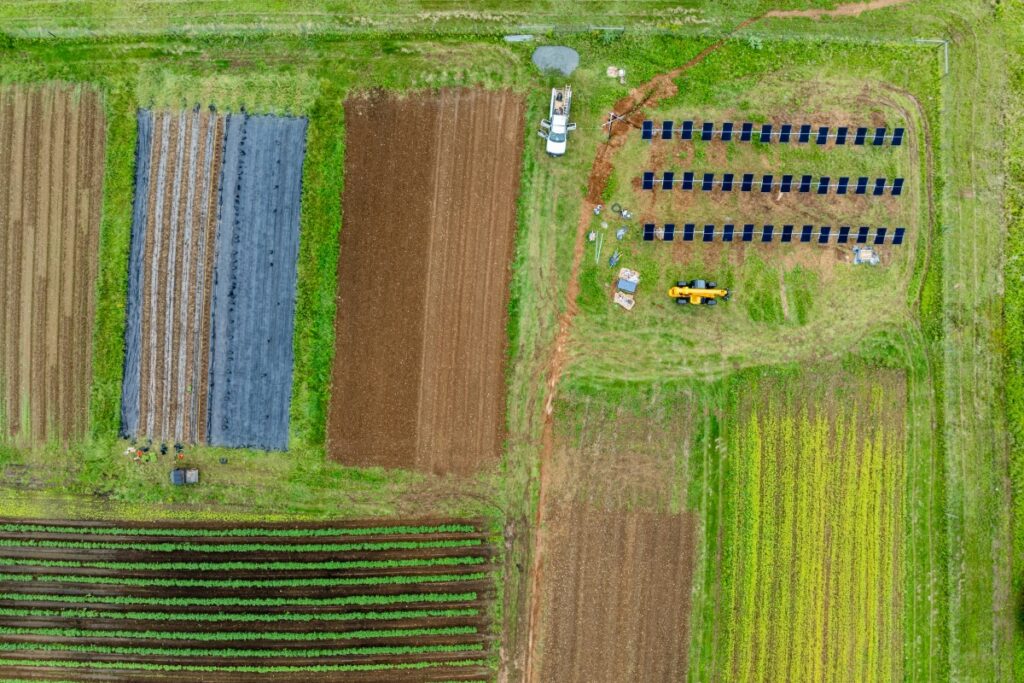
Over the summer, we told you about Virginia’s first crop-based agrivoltaics project. We hope to create a demonstration site that will inform dual-land-use projects and distributed generation policy in Virginia. The agrivoltaics project is now producing enough electricity to power the farm and charge our backup batteries!
Since the system has been connected, the farm’s well pumps, produce cooler and greenhouse have run on 100% solar and battery storage on multiple days and even kept running when the grid was recently down. The farm team has planted fall crops in-ground and in raised beds, and we will share the initial results of the partial growing season once complete.
All told, 42 spaced solar panels mounted on six-foot-high racks, with rows spaced about twelve feet apart, allow sunlight to evenly reach the garden beds underneath. Our system is backed up by two batteries with a collective 27 kilowatt of storage, capable of providing energy to power farm operations in the event of a grid outage.
Well-constructed smaller-scale solar energy has an important role to play in shaping and advancing Virginia’s clean energy future in ways that also respect and preserve this region’s natural resources and rural economy. Thoughtfully developed agrivoltaics that incorporate best practices to minimize land impacts allows our rural economies to thrive by protecting farm businesses from escalating electric bills and diversifying their revenue streams.
This project at Roundabout Meadows will function as a demonstration site that local farmers, installers, developers and policymakers can visit. Check our our three short video updates about the agrivoltaics project →
Upcoming Solar Events

TEDxWarrenton: Unscripted Futures
Saturday, Oct. 25, Laurel Ridge Community College, Warrenton
PEC’s Senior Energy & Climate Policy Advisor Ashish Kapoor will be speaking at this year’s TEDx event, Saturday, Oct. 25. Topic: Real Change Begins in the Radical Middle
TEDxWarrenton is a self-sustaining, volunteer-run, group with a license from TED to independently organize a local TED event. TEDxWarrenton was established in 2021 for spreading new ideas and connecting a community within Fauquier County eager to grow their impact on the world. TEDx is a platform that amplifies the ideas of change makers; a forum to foster new perspectives, and a community committed to challenging its members to be better.
—
Webinar: The Fight to Stop Dominion’s Attack on Small-Scale Solar
Tuesday, Oct. 21, Register for this Online Event
Learn the details of Dominion’s proposal that would severely limit a Virginia policy called net metering, as well as what you can do to stop it from passing. PEC’s Energy & Climate Policy Advisor, Ashish Kapoor, will speak about our involvement in the Virginia State Corporation Commission (SCC) case about net metering as well as our recently commissioned report Value of Distributed Solar in Virginia: A Framework for Fair Net-Metering Compensation.
Register for this free webinar →
As challenging as the problems are, the potential solutions are just as exciting. You’ll be hearing more from me in the coming weeks and months as PEC gears up to advocate for legislative bill proposals related to renewable energy, data centers and land use in the Virginia General Assembly this winter. As much of our ability to make change comes down to our elected officials in Richmond, please remember to vote on or before Election Day, Tues., Nov. 4.
Sincerely,
Ashish Kapoor
Senior Energy & Climate Advisor
[email protected]
540-347-2334 x7054