
This text was taken from an email alert sent out on Jan. 6 2026. Sign up for email alerts →
Dear Supporter,
With the first full week of the new year underway, I want to remind you about a critical opportunity to show support for small-scale solar in Virginia.
We are approaching a critical deadline: Tuesday, Jan. 13 is the final day to submit public comments against Dominion Energy’s proposal to slash the credit rate for solar owners. If approved, this change would nearly double the time it takes for a solar project to pay for itself, making it much harder for Virginia families and businesses to invest in energy independence while protecting themselves from rapidly escalating power bills.
Net Metering is a Critical Piece to a More Distributed Energy System
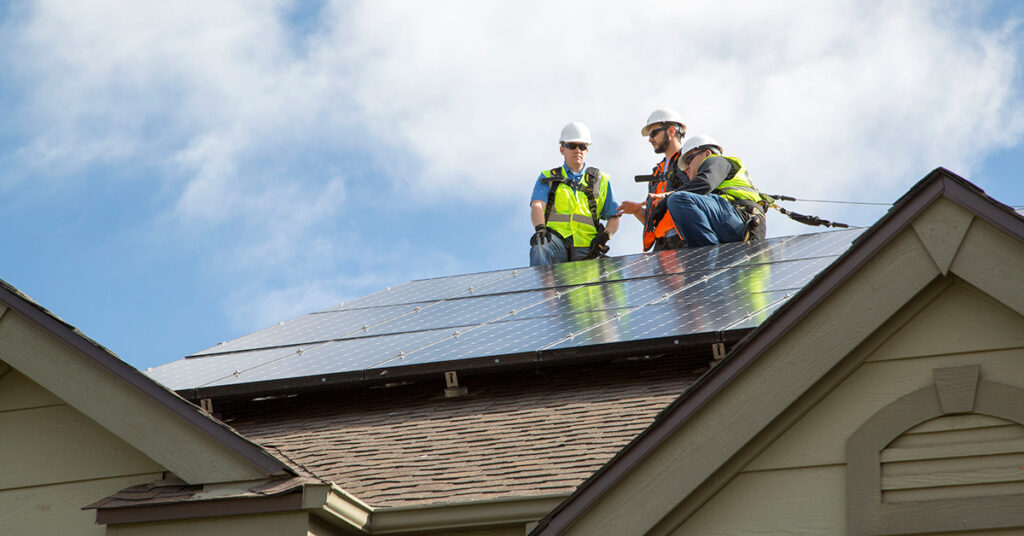
We believe small-scale, distributed solar, like on rooftops, parking lots, brownfields and dual-use agrivoltaics, must be a greater part of Virginia’s energy future. These projects help protect our working farmland and open spaces while also bringing clean energy to the grid much faster than large-scale energy generation. Cumulatively, these projects also mitigate transmission line impacts and the need for expensive new energy generation – that we all pay for through our utility bills.
Net metering is a billing arrangement whereby rooftop solar owners who produce more energy than they use, receive a 1:1 credit on their electric bill for excess energy that is sent back to the grid [see below for more on how this works]. It is the fundamental billing structure that makes small-scale solar economically viable for homeowners, farmers and businesses.
However, in May 2025, Dominion Energy petitioned the State Corporation Commission to cut the net metering credit by nearly half. Why? Because monopoly utilities like Dominion make maximum revenue from centralized generation — like gas plants and large-scale solar — and energy infrastructure like transmission lines. Motivated by profits, Dominion’s tremendous lobbying pressure has been a longstanding and powerful force against efforts to create a more distributed grid.
Unfortunately, Dominion’s proposed change will severely undermine the practicality of rooftop solar for many people and critically hamper increased distributed energy generation and energy independence at a time when Virginia is importing more energy than ever and more than any other state, and skyrocketing data center energy demands are straining the grid.
The State Corporation Commission will issue a formal decision on Dominion’s proposed change this year, with public comment opportunities closing on Jan. 13. The Piedmont Environmental Council (PEC) is serving as an “intervenor” in this case, joining our partners, challenging Dominion’s arguments, posing questions and offering additional information that can be used in the SCC’s decision.
We hope you’ll join us in pushing back against Dominion’s proposal.
Take Action: Tell the SCC to Keep Fair Net Metering Structures in Place
Please take a few minutes to submit comments to the Virginia State Corporation Commission in support of small-scale solar. Homeowners, farmers and local business owners should have affordable access to energy independence and should be compensated fairly for energy they send back to the grid.
Your written comments can be submitted on the SCC’s website now through Jan. 13. You also have the option of speaking remotely at the evidentiary hearing on Jan. 20. Sign up online using the case number PUR-2025-00079.
Your comments can be simple—ask the SCC to keep the current net metering structure in place—or more detailed, using your takeaways from personal experience or our commissioned report referenced below.
Talking Points
- Protect Energy Independence and Affordability: Dominion’s proposal to slash the net metering credit by nearly half would double the “payback period” for solar investments. This makes clean energy financially inaccessible for average Virginia families, farmers, and small businesses who are simply trying to lower their escalating monthly power bills.
- Value the Grid Benefits of Distributed Solar: Small-scale solar (on rooftops and parking lots) provides immense value that Dominion’s proposal ignores. These projects bring clean energy online quickly and reduce the need for expensive new transmission lines and large-scale power plants—projects that take years to develop with costs that are ultimately passed down to all ratepayers.
- Prioritize Land Conservation: By incentivizing small-scale solar through fair net metering, Virginia can meet its renewable energy goals while protecting working farmlands and open spaces from being converted into massive, utility-scale solar arrays. Emerging practices, like dual use agrivoltaics that combine agriculture and solar production, would also be severely hampered by a change in net metering credits.
- Strengthen Grid Reliability: Virginia currently imports more electricity than any other state. At a time when data centers are putting unprecedented strain on our infrastructure, the SCC should encourage—not discourage—distributed energy generation that builds a more resilient and self-sufficient local power grid.
- Make it Personal: If you have solar or are considering it, mention how this change would directly affect your financial decision or other’s ability to manage their energy costs.
How Net Metering Works
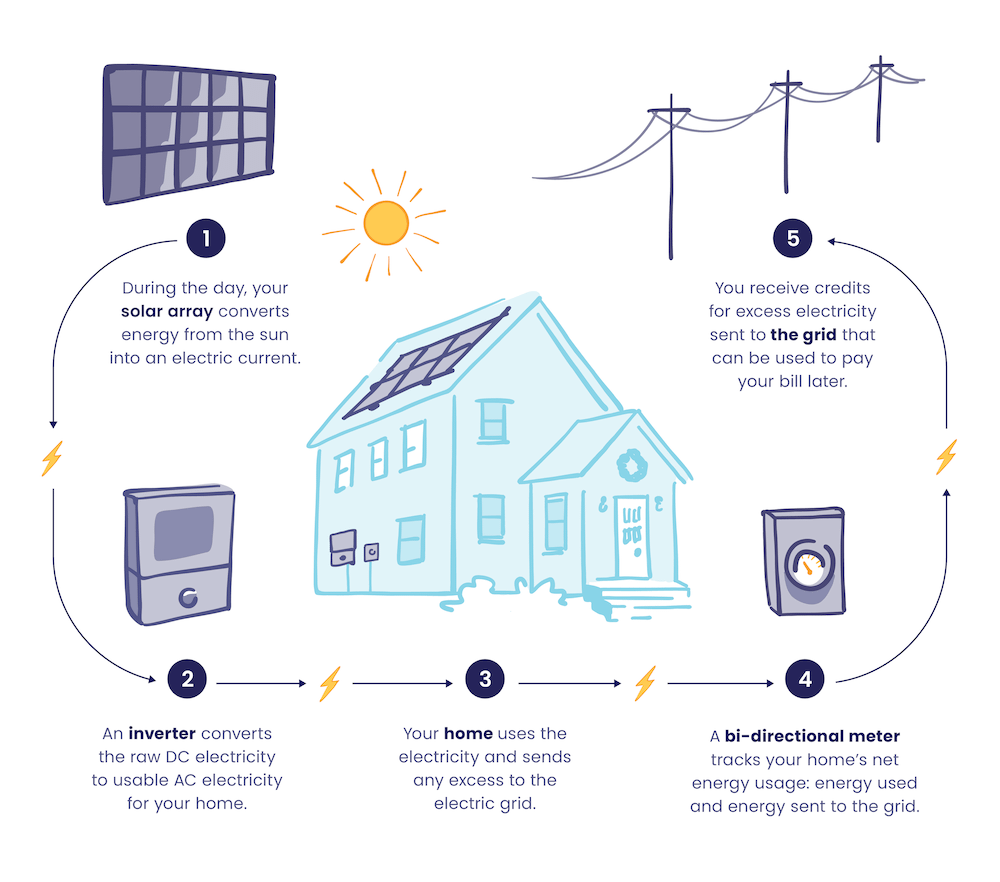
If you have a rooftop solar installation on your property, when the sun is shining, the energy your panels produce is directly powering your home. Any excess energy that cannot be used in that moment goes back into the greater grid, and you get full credit for each unit produced.
The credit is automatically applied later, perhaps to your evening usage or in the winter months when there is less sun. Those credits are good for an entire year. This is how solar installations “pay for themselves” over time and what makes small-scale solar financially accessible for people.
Webinar: Why Dominion is Trying to Kill Small-Scale Solar
On Monday, Dec. 8, PEC held a webinar to talk more about distributed energy, net metering and Dominion’s attempt to weaken it.
PEC Report Finds Distributed Solar Far Exceeds Value Communicated by Dominion
As part of PEC’s efforts to advocate for distributed energy solutions, we commissioned a study to calculate the actual value of distributed solar generation in Dominion Energy’s territory, factoring in the range of benefits such as land conservation, connecting clean energy quickly, and mitigating new transmission and generation impacts that the utility has not accounted for in its proposed cuts to net metering values.
The report, written to be relevant and readable, demonstrates that small-scale, customer-sited solar delivers substantial value that far exceeds what is currently acknowledged by Dominion in its proposed net metering cuts.
By valuing distributed energy fully and fairly, the Commonwealth is more likely to continue meaningful investment in these resources that can play an increasingly important role in meeting Virginia’s energy needs in a reliable, affordable and sustainable way. Read more about the report →
We’ll keep you updated as the SCC deliberates on the net metering case in early 2026 and let you know about other chances to support small-scale solar in the upcoming General Assembly legislative session in Richmond starting in mid-January.
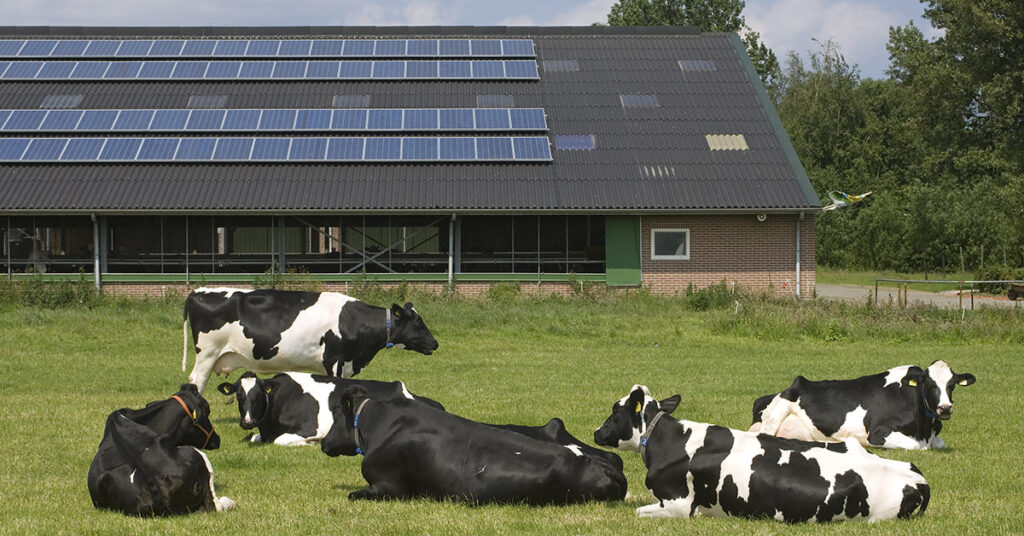
In the meantime, I encourage you to check out a new video we just released about our agrivoltaics demonstration project at PEC’s Community Farm. Agrivoltaics is the practice of producing food and solar energy on the same plot of land. Like solar on rooftops, parking lots, or brownfields, it is a form of distributed generation that could be another important solution to Virginia’s growing energy challenges.
Sincerely,
Ashish Kapoor
Senior Energy & Climate Advisor
[email protected]
540-347-2334 x7054