
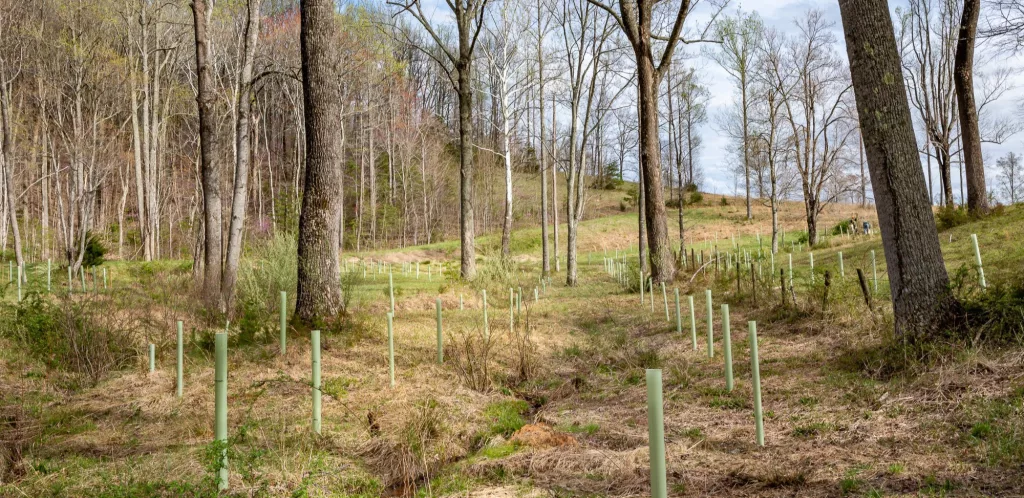
What are riparian buffers?
Riparian buffers are vegetated or forested transitional zones between land and water resources, such as streams, rivers, lakes, ponds or wetlands. The effectiveness of riparian buffers can vary on a number of factors, like type of vegetation, width, slope, size of the stream and soil type. Forested buffers are the most effective at protecting and/or enhancing water quality.
Why are they important?
Riparian buffers:
- filter nutrients, pesticides and animal waste from agricultural land;
- stabilize eroding banks;
- filter sediment from runoff;
- provide shade, shelter, and food for fish and other aquatic organisms;
- provide wildlife habitat and corridors for terrestrial organisms;
- protect cropland and downstream communities from flood damage; and
- provide space for recreation (fishing, birding, hiking, canoeing, etc.)
Sustainable design
An effective riparian buffer will be at least 35 feet in width (a 100-foot buffer can generally filter more than 60% of pollutants) and include three zones of vegetation, particularly under conditions of steep slopes, erosion and intensive land use.
- Zone 1 (streamside) – undisturbed mature forest stabilizes the stream bank; at least 25 feet.
- Zone 2 (middle zone) – trees and shrubs slow runoff and catch sediment; 50-100 feet.
- Zone 3 (outer zone) – vegetated (e.g. perennial plants, unmowed grasses) or wooded; serves as the margin between the rest of the buffer and land actively used; typically 25 feet.
Getting started
Federal, state and local cost-share programs are often available to help landowners offset the costs of establishing riparian buffers and other best management practices on their properties.
Download our fact sheet → Riparian Buffers: Benefits for water, wildlife, and people
Additional Resources
General Information:
Information about the benefits and importance of riparian buffers.
Upper and Middle James Riparian Consortium:
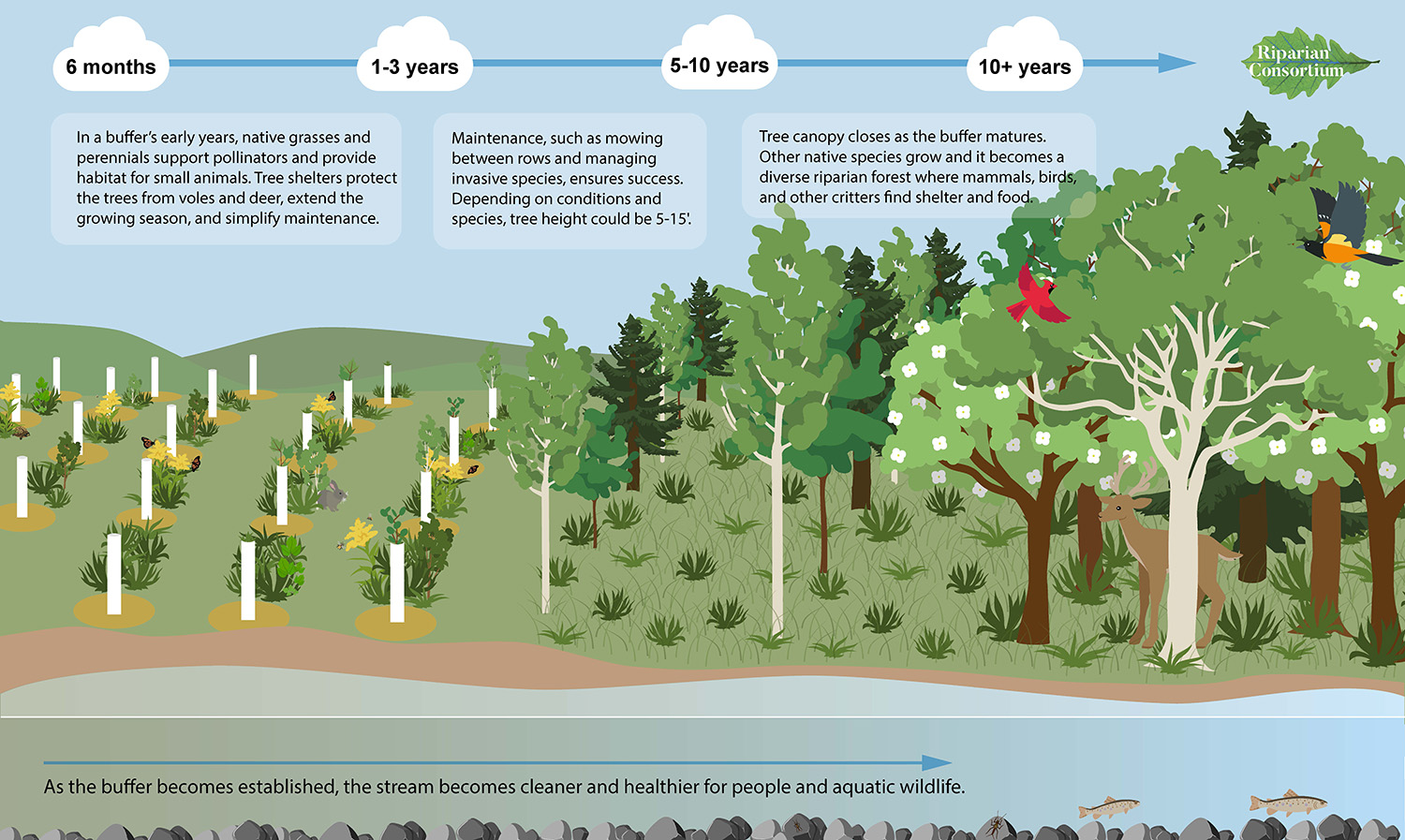
Chesapeake Bay Program, Alliance for the Chesapeake Bay, and the United States Forest Service:
Virginia Department of Forestry:
- Forests and Water: Get the Most Out of Your Land
- Riparian Forest Buffers: Forests on the Water’s Edge
- Why Plant Forests Buffers?
Buffer Design & Maintenance
Information and tips for maintaining your riparian buffer once it is installed.
Chesapeake Bay Foundation:
James River Buffer Consortium:
University of New Hampshire Cooperative Extension:
U.S. Department of Agriculture:
Virginia Cooperative Extension: