
We need a Plan for the Future
- Pause approvals of hyperscale data center proposals
- Require a full accounting of how much energy and infrastructure the utilities have already committed to providing as well as that which is already in the system for approval
- Require a comprehensive and transparent plan for protecting our grid, water, air and communities from the destructive impacts of this unconstrained growth
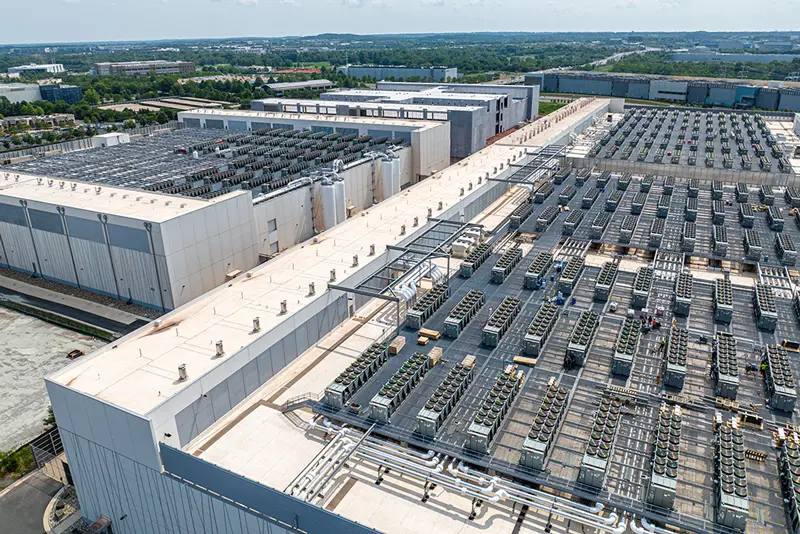
WARRENTON, Va. (Jan. 5, 2026) – Virginia’s energy grid and communities are at a breaking point. Will 2026 finally be the year the Virginia General Assembly takes action to reign in unconstrained data center development with guardrails that ensure a smarter digital future for the state?
What caused the current data center crisis?
State agencies and elected officials failed to take ownership and responsibility for the massive transformation the data center industry is bringing to local communities. State agencies have made no effort to assess the aggregate impacts on the environment, on human health and safety, or on the costs individual electricity customers will absorb to subsidize the data center industry’s needs.
This lack of oversight is made worse by the lack of a state plan to produce an accurate and comprehensive assessment of all the costs and benefits of data centers.
“Dominion Energy has caused what we call a ‘crisis by contract.’ In private contracts out of the public eye, Dominion has agreed to provide data centers with power far beyond what is available and on unreasonable timelines. Dominion is using these contracts to pressure the state into fast-tracking construction of massive transmission and power generation projects through communities with little consideration of the impacts. Virginia’s electric grid and communities are at a breaking point; state and local elected bodies need to pause approvals and demand transparency from both Dominion and the data center industry, as well as state oversight, to protect the public from the cumulative impacts of unconstrained data center growth. At the moment, there is no disciplined analysis or plan for our energy future,” said Christopher Miller, president of The Piedmont Environmental Council.
What are the impacts of the current approach to data centers?
Recently, Monitoring Analytics, LLC, an independent market monitor for PJM that ensures PJM remains competitive, fair, and efficient for all customers, raised concerns to the Federal Energy Regulatory Commission (FERC) that continuing to add more data centers to the grid is risking reliability and affordability for other customers.
Demand has far outstripped supply, and there is no plan at the regional, state or local level to meet data center energy needs. The transmission lines and gas plants proposed are ad hoc and reactive and come with destructive consequences that have not been calculated, including:
- decreased grid reliability
- higher electric bills for everyone
- unsustainable water consumption
- degraded air quality
- transmission lines cutting through neighborhoods
- widespread industrialization of communities
Data centers impacts on communities and rising energy costs for residential, small business and agricultural ratepayers were a top election issue for voters in 2025.
Community members and public officials are increasingly questioning the state sales tax exemption given to the data center industry. That exemption cost Virginia $1.6 billion in revenue in FY2025, for little measurable lasting benefit and massive negative impacts on communities and conservation resources both from the data centers and the energy infrastructure that is required to serve them.
The enormous demands on energy, water, and land are destroying quality of life, threatening energy reliability and increasing the likelihood of electric grid outages. Virginians are recognizing that not only is their quality of life being threatened, but they are also subsidizing the build out of infrastructure causing those impacts.
What needs to be done to address the data center crisis?
“Coordinated and careful planning can generate solutions to mitigate the damage. But, at the moment, our state has abdicated responsibility for Virginia’s energy future and the effects of a dramatic expansion of new infrastructure on the people of Virginia, deferring to the recommendations of monopoly Dominion Energy and the rural electric cooperatives serving the wealthiest tech companies in the world. The General Assembly needs to step up and do its job to create a transparent, sustainable, and achievable energy plan.The legislature must also direct the State Corporation Commission or other agency to implement a regulatory framework for state oversight that reviews and mitigates the impacts of new data center customers connecting to the grid,” said Miller.
First steps are for Virginia to:
- Pause approvals of hyperscale data center proposals
- Require a full accounting of how much energy and infrastructure the utilities have already committed to providing as well as that which is already in the system for approval
- Require a comprehensive and transparent plan for protecting our grid, water, air and communities from the destructive impacts of this unconstrained growth
This year, the General Assembly should pass legislation that includes:
- State oversight and coordinated planning across the agencies of government including State Corporation Commission review of interconnection
- Enhanced transparency through statewide reporting on data center energy use, water consumption, and emissions
- Requirement for air quality studies of cumulative impacts from thousands of onsite generators that have been approved and continue to be permitted
- Denial/Rollback of the Department of Environmental Quality change on more frequent use of highly polluting back up generators
- Protection for residents and businesses from subsidizing data center infrastructure
- Review of the reasonableness of the massive state sales and use tax exemption given to the data center industry
- Analysis of ways to avoid and mitigate impacts on communities and conservation resources
Media Contact: Michael F. Doble, APR, CFCP
Piedmont Environmental Council Communications
(703) 579-7963, [email protected]
#####
The Piedmont Environmental Council (PEC) works to protect and restore the lands and waters of the Virginia Piedmont, while building stronger, more sustainable communities. Founded in 1972, PEC is a locally based, community-supported 501(c)3 nonprofit and accredited land trust. At the core of PEC’s approach is a focus on educating, engaging and empowering people to effect positive change in their communities.