
This text was taken from an email alert sent out on January 12, 2026. Sign up for email alerts →
Dear Supporter,
The new year is off to a busy start in Orange County! Read on to learn more about zoning changes related to data centers and agriculture, an opportunity to weigh in on PFAS-contaminated biosolids, and two wins, including the protection of Orange County farmland and a withdrawn gas power plant proposal.
This work and our success in it rests in your consistent action on important issues like these. It also couldn’t happen without financial support. Become a PEC Member today →
County Approves Technology Zoning District, Town Considers Data Centers
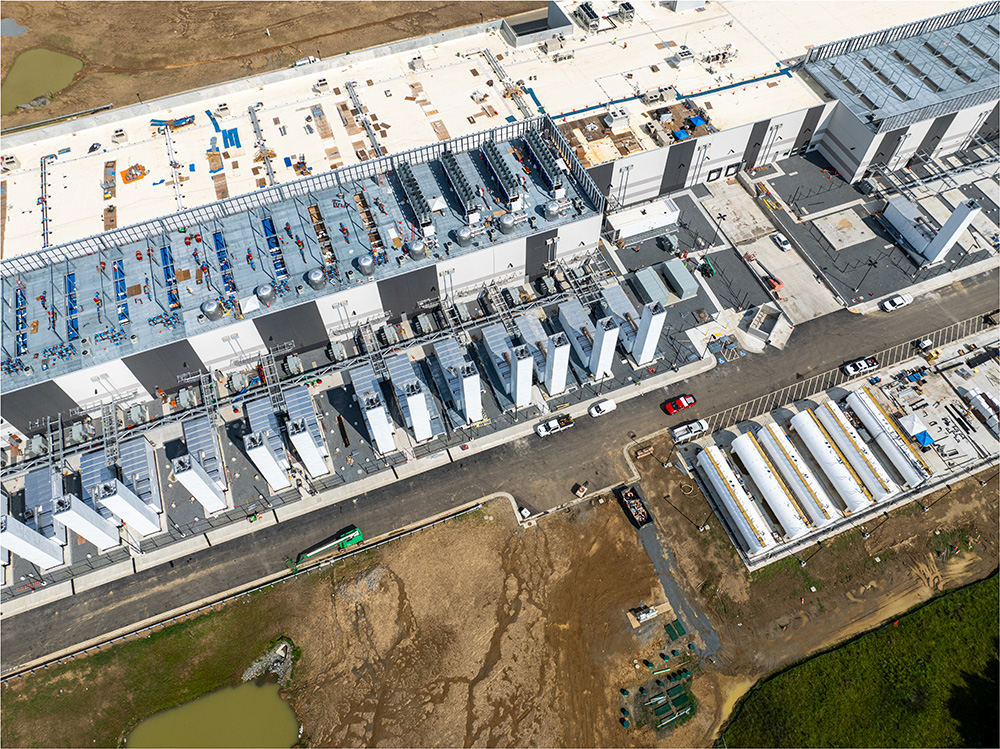
Last month, despite opposition from dozens of residents, the Board of Supervisors approved a new Technology zoning district that allows practically any parcel of land, anywhere in the county, to be rezoned for data centers.
The new ordinance does include some provisions intended to avoid or mitigate impacts of data center development, and it will ensure a public input process for future proposals. However, the maximum-flexibility approach approved by the Board:
- does not steer data center development away from neighborhoods, schools or farmland;
- does not include any cap on acreage or on how many parcels countywide could be rezoned for data centers; and
- leaves the door wide open for any future boards of supervisors to site data center development in inappropriate areas, especially when negotiating with the richest companies in the world.
Thank you to everyone who attended the public hearings and wrote to the board. If, and when, a data center proposal is introduced in Orange County, you will hear from PEC on next steps.
–
For now, we turn our attention to the Town of Orange and its Planning Commission public hearing on Tuesday, Jan. 13 to consider changes to the Town’s data center zoning ordinance.
Town of Orange Data Center Ordinance Public Hearing
Tuesday, Jan. 13 @ 6 p.m.
Town of Orange Community Meeting Room
235 Warren Street, Orange
Currently in the Town, data centers are allowed by-right, without a special use permit or public hearing, in four zoning districts, including in the center of town and portions of neighborhoods. The definition of “data centers” is also outdated and does not reflect a modern hyperscale data center or its accompanying impacts.
The Planning Commission is considering some useful changes, specifically removing data centers as a by-right use and instead requiring a special use permit in some districts. But the draft amendments don’t go far enough. The changes would still allow data centers allowed by-right in the Traditional Neighborhood Development District (“Round Hill/Uptown North Orange”) and the Town Activity Center district, which includes all of Madison Road, north of downtown.
But data centers should not be allowed anywhere in the Town. Towns are places that are meant to be pedestrian-oriented, human-scaled places for people to live, work, and play. They are land constrained so the limited space should be used for housing, retails and public places. The current data center market is not interested in “smaller” (i.e. 40,000 square foot) data centers that could blend into an office park setting. So any proposal would likely be over 80 feet tall, over 100,000 square feet and would be accompanied by new 230 kilovolt transmission line(s) and associated substation(s), which are also not conducive to a town environment.
If you are a Town resident, email the Planning Commission ([email protected], [email protected], [email protected], [email protected], [email protected]) and tell them the ordinance should prohibit hyperscale data centers over 40,000 square feet within the Town of Orange.
PFAS-Contaminated Biosolids Continue to Spread
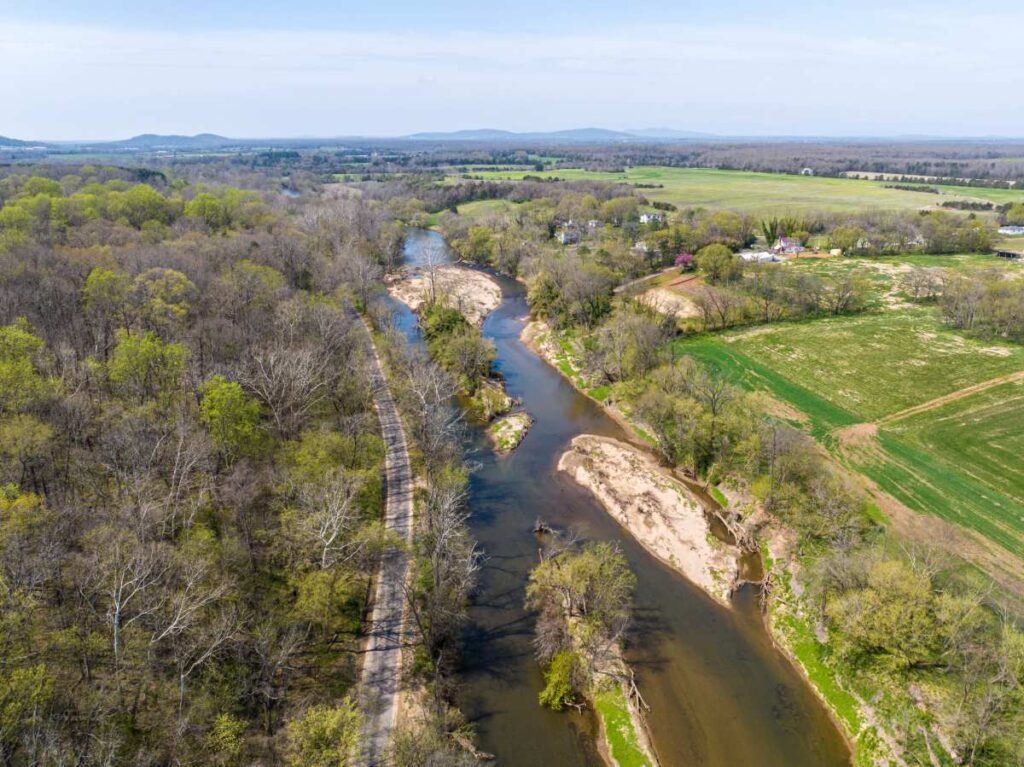
Thanks to dozens of residents who voiced their concerns, the Virginia Department of Environmental Quality (DEQ) held a public hearing in October on a pending permit to spread PFAS-contaminated biosolids as fertilizer on Orange County farmland. PEC and 80+ residents attended DEQ’s public hearing to urge the agency to test for and address the presence of PFAS in biosolids and give farmers complete information about what’s being spread on their land and the unacceptable level of risk PFAS pose to human health.
Once DEQ has prepared a summary of comments received and its response, it will hold a second public hearing and a final decision on the permit will follow. We’ll let you know when that is announced.
–
In the meantime, another DEQ action, pending in Arlington County, has implications for Orange residents. How’s that, you ask? Arlington County’s Water Pollution Control Plant (WPCP) is the second-largest source of land-applied biosolids to Virginia, and data shows that 75% of those untested biosolids are being spread across PEC’s region, including more than 7,000 tons in Orange County since 2018. DEQ is proposing to renew the Arlington County WPCP permit without requiring any testing or limits on PFAS.
As Virginia residents and taxpayers who pay for the state’s sewage treatment systems, we have a right to expect the permitting process to protect us. As we’ve said before, PFAS-contamination is harmful to both human and animal health as well as the environment. It contaminates drinking water, ground and surface waters, soil, livestock and crops, and there is no safe level of exposure.
Take Action: Tell DEQ to impose limits on PFAS from the Arlington County WPCP:
- Email Comment by Jan. 30: Use this form to craft an email [email protected] (cc: [email protected])
- Speak in Person Jan. 15: Deliver comments at the public hearing in Arlington (Details below)
DEQ Arlington County Public Hearing
Thursday, Jan. 15 @ 7 p.m.
Innovation Elementary School
2300 Key Blvd, Arlington
Changes to Agricultural Zoning District Likely

The Board of Supervisors is resuming its work updating the Agricultural district. Last year’s public work sessions included some positive signs that the changes will result in increased protection for agriculture and the rural area. In particular, the board seemed open to adopting a sliding scale approach for managing growth and preserving agricultural land.
Sliding scale density: The sliding scale method bases the number of allowed residential lots on the size of the parent parcel they’re built on. The larger the parent parcel, the fewer residential lots allowed. The advantage of sliding scale is that higher densities are allowed on smaller parcels that are difficult to farm and have likely already transitioned out of agriculture and into the residential land market. In this way, higher densities on smaller parcels promotes an economically beneficial use of land where farming is not profitable or practical.
However, we remain concerned that a key theme among two small focus groups, hand-selected and convened by the county, was a perceived negative “impact” of conservation easements. Conservation easements are important tools for protecting Orange County’s working farms, waterways, forestland and important natural and cultural resources. Additional beneficial tools include sliding scale zoning, purchase/transfer of development rights programs, lot clustering and other strategies employed in other rural localities.
Look for a deeper dive into this topic in an upcoming email.
Proposed Gas Power Plant Withdrawn
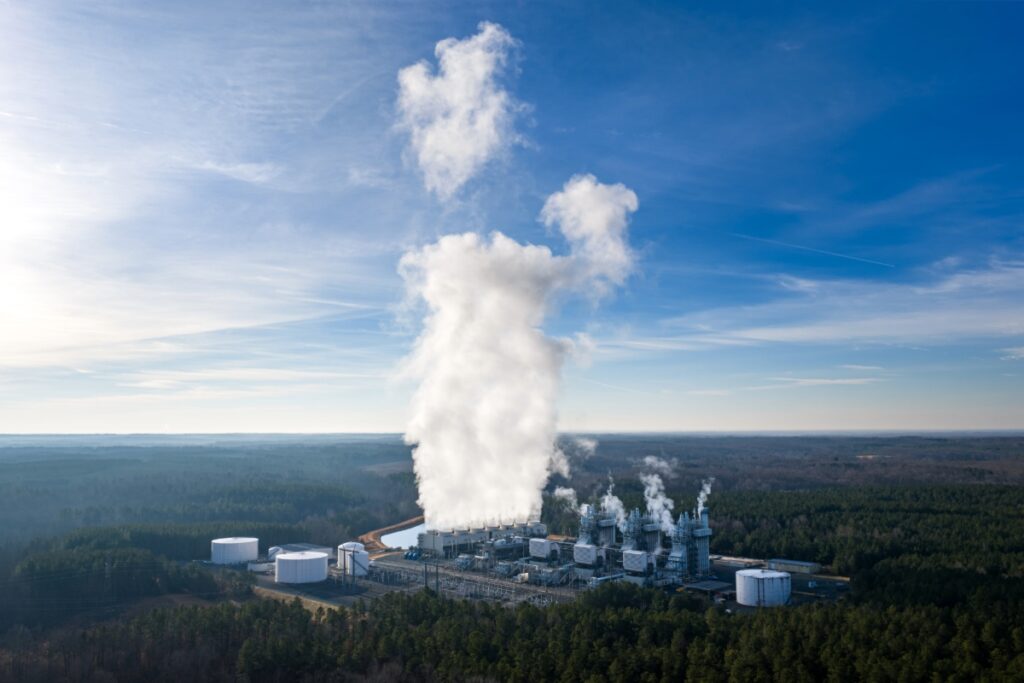
Last year, regional grid operator PJM announced a slate of new gas power plant proposals across the state, including one in Orange County. After a period of uncertainty, we’re happy to report that the proposed 1.2 gigawatt gas power plant was withdrawn from consideration in Orange County. It was one of 51 projects PJM had fast-tracked to meet energy demands driven by data centers. Nearby Fluvanna County will hold a meeting on one of those gas plant projects that threatens air quality of the region Tuesday, Jan. 13.
PEC and Willis Family Permanently Protect Farmland
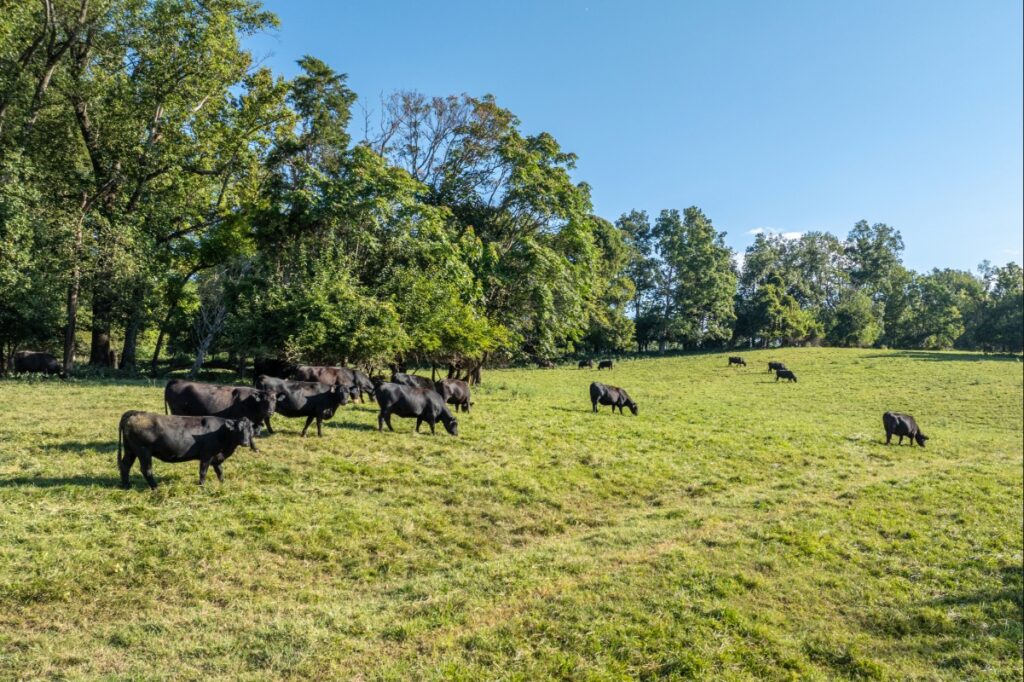
In Orange County, PEC partnered with the Willis family to permanently protect 365 acres of working farmland with an Agricultural Land Easement (ALE). This important conservation effort protects 3.2 miles of river frontage for better water quality, open land for livestock grazing and significant hardwood forests for wildlife habitat. It also connects to 13,000 acres of conserved land and protects the viewshed of the Blue Ridge Turnpike, a Virginia Scenic Byway and part of the Journey Through Hallowed Ground National Scenic Byway.
Agricultural Land Easements are conservation easements that specifically protect working farms and ranches by limiting non-agricultural uses of the land. They are meant to protect the nation’s food supply, recognizing that there is danger in converting productive working land into non-agricultural uses, like residential or commercial.
Under the ALE program, PEC facilitated a federal grant to purchase a conservation easement from the Willis family, extinguishing the subdivision and development rights on the property. Now, the land is reserved for the agricultural uses permitted by the easement, and the farming family can use the cash and tax benefits how they wish (often to reinvest into their farming operation). Learn more about conservation easements →
Feel free to email or call me at the information below. I’m personally available if you have any questions or comments. And if you know anyone who would like to receive these email updates about Orange County, please forward this email to them and let them know they can sign up for updates here.
Thank you,
Don McCown
Land Use Field Representative, Orange & Madison counties
[email protected]
(434) 977-2033 x7047