
This text was taken from an email alert sent out on Nov. 25, 2025. Sign up for email alerts →
Dear Supporter,
Orange County is about to take a significant step intended to accommodate — and minimize the adverse impacts of — data center developers interested in Orange County. The Planning Commission is poised to recommend a draft ordinance establishing a Technology zoning district and is seeking public input.
In this proposal, Orange County is considering many of the right questions. However, the county must also consider some significant unintended consequences of a well-intentioned proposal.
Read on for the latest on the county’s efforts to establish the data center ordinance, our concerns and questions and how you can weigh in!
Orange County Planning Commission to Consider Proposed Technology District at Hearing on Dec. 4
Mark your calendar for Thursday, Dec. 4 at 6 p.m. for the Planning Commission’s public hearing on a proposed Technology zoning district.The now-open comment period and the public hearing on Dec. 4 is the public’s best and possibly only chance to influence the outcome before the Board of Supervisors votes at its Dec. 16 meeting.
Please plan to attend the hearing on Dec. 4 and share your comments in person, and/or contact your planning commissioner now with your questions and concerns.
Orange County Planning Commission Public Hearing
Thursday, Dec. 4 @ 6 p.m.
Public Safety Building
11282 Government Center Drive
Orange, VA (in the Board Meeting Room)
I’ve provided information below on some issues that have vexed other localities across the state that have already experienced rapid and unchecked data center development, as well as some thoughts on how Orange County’s proposal could be strengthened, for the purpose of informing your comments. I encourage you to read the proposed draft ordinance for yourself and then submit comments to your planning commissioner before Dec. 4.
Background – How did we get here?
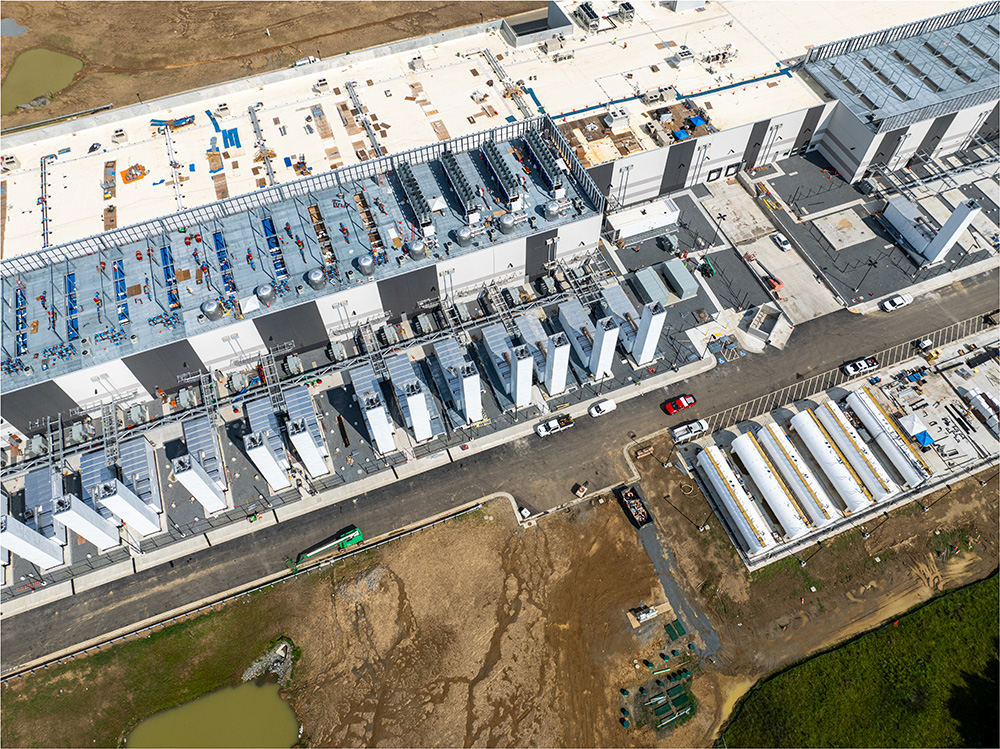
Virginians are disproportionately bearing the financial and environmental costs of the global investment in cloud computing and artificial intelligence. The unbridled growth of the data center industry is altering our landscapes and resulting in rising energy costs, extraordinary environmental consequences and delayed decommissioning of fossil fuel power plants. With no state-level oversight or regulatory review of the cumulative demands and impacts of data centers, it falls on local governments to negotiate with and try to manage the most impactful industry in the history of our state, made up of the world’s wealthiest corporations. Orange County is now entering the fray and is considering how to position itself in this new and rapidly-changing economy.
As I first mentioned in March, and again most recently in September, Orange County has been contemplating a number of changes to its zoning ordinance, including the establishment of a “Technology” zoning district, intended to accommodate – and minimize the adverse impacts of – data centers. The proposed Technology district is on track for a final vote by the Board of Supervisors later in December.
Although we still have concerns, there are points of agreement and we do think that planning commissioners are asking the right questions.
The concerns:
- Floating Zoning District. This zoning district could be located anywhere in the county. Rather than a typical zoning district with a pre-determined, specifically-designated area or set of parcels on the county zoning map, the draft ordinance would establish the Technology district as a “floating” zone. This floating zone would allow developers to request any parcel of land to be rezoned to the Technology district.
- That’s risky enough, but as written, the draft ordinance also doesn’t include any cap on acreage or on how many parcels would be allowed to be rezoned for data centers county-wide. The open-ended flexibility of this floating zone approach during this booming market will lead to speculation by developers for Technology “districts” all over the County.
- That’s risky enough, but as written, the draft ordinance also doesn’t include any cap on acreage or on how many parcels would be allowed to be rezoned for data centers county-wide. The open-ended flexibility of this floating zone approach during this booming market will lead to speculation by developers for Technology “districts” all over the County.
- Potential for More Impactful Transmission Lines. Another potential problem with a floating zone in the context of a data center proposal is that nothing in the draft ordinance limits a potential data center development to parcels near existing transmission lines.
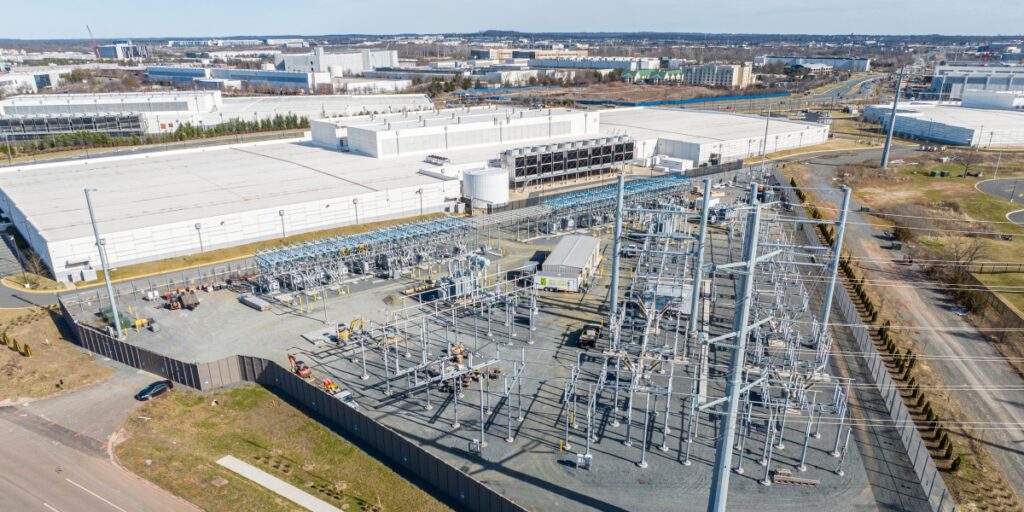
- Transmission to directly serve data centers is typically provided via 230 kilovolt (kV) or larger transmission lines. Orange County currently has only one such line: a 500 kV line across the eastern edge of the county, crossing Virginia Route 3 between Burnt Mill Road and Somerville Road. County officials and the public should understand that once a data center is approved at the local level, the electric utility is required to provide power, even if that means using eminent domain to route new transmission lines.
- Transmission to directly serve data centers is typically provided via 230 kilovolt (kV) or larger transmission lines. Orange County currently has only one such line: a 500 kV line across the eastern edge of the county, crossing Virginia Route 3 between Burnt Mill Road and Somerville Road. County officials and the public should understand that once a data center is approved at the local level, the electric utility is required to provide power, even if that means using eminent domain to route new transmission lines.
- Data Center Campuses of Unlimited Size. Under the draft ordinance, on any parcel zoned for data centers, a full 70% of its acreage could be built out with impervious surface, such as data center buildings, parking lots, substations, etc.
- This large allowance has significant water quality implications, in that impervious surfaces cannot filter pollutants from stormwater before they roll into the local drinking water supply.
- The large allowance also has significant potential energy and transmission implications. For example, the Wilderness Crossing proposal allocates over 700 acres for data center development. Under this draft ordinance, 490 acres of a 700-acre parcel could be developed into data centers — that’s over 21 million square feet — which, based on our experience with other data center developments across Virginia, would require about 6.3 gigawatts of power. That amount of power would likely require two 500 kV lines/substations. And that’s just one data center proposal. The open-ended nature of the draft ordinance would allow even larger campuses on large acreage parcels or consolidated parcels.
- Wastewater. Evaporation through cooling towers concentrates minerals, which are discharged from the data center in the form of blowdown — water drained to remove mineral buildup — that can contain toxins. While the draft ordinance addresses recycled water and water released back into waterways, the capacity of on-site wastewater treatment facilities to handle the amount and concentration of projected blowdown should be more thoroughly considered.
Where we agree:
- Transparency and public input.The draft ordinance requires data center developers to seek a special use permit for the Technology district. We agree. Data centers should require a special use permit, which would make their approval subject to public hearings and to reasonable conditions to protect the public health, safety and general welfare.
- Power generation: On-site and emergency backup.On-site power generation is increasingly a common part of data center proposals, to avoid the years-long wait to get power from Dominion Energy. These on-site power plants produce noise constantly and have significant air quality implications.
The draft ordinance considers any on-site primary power generation as a separate and distinct use, requiring approval by special use permit that would be subject to public hearing. We agree. Any on-site primary power generation should be approved separately as a power plant by special use permit.
- Related to this, Virginia’s Department of Environmental Quality (DEQ) is considering relaxing the rules about when emergency backup diesel generators can be run. Since any single data center uses several dozen massive diesel generators, each the size of a train car and each producing 2,000-3,500 kilowatts (kW) of power, this shift could significantly increase air pollution. Orange County’s draft data center ordinance restricts the use of emergency generators to backup or emergency use only. We agree. On-site diesel generators should be used for emergency backup power only.
- Related to this, Virginia’s Department of Environmental Quality (DEQ) is considering relaxing the rules about when emergency backup diesel generators can be run. Since any single data center uses several dozen massive diesel generators, each the size of a train car and each producing 2,000-3,500 kilowatts (kW) of power, this shift could significantly increase air pollution. Orange County’s draft data center ordinance restricts the use of emergency generators to backup or emergency use only. We agree. On-site diesel generators should be used for emergency backup power only.
- Water consumption. The draft ordinance prohibits the use of potable (drinkable) water, groundwater or raw water from the Rapidan River or any perennial stream for industrial processes or data center cooling. We agree. Data centers can consume an enormous amount of water, and Orange County does not have water to spare, as the Rapidan River is prone to impactful droughts, which we saw in 2023 and 2024.
Take Action: Make your voice heard
The Planning Commission needs to hear from you! Read the draft ordinance and contact your planning commissioner now with questions and concerns.
Urge Orange County officials to heed the hard-learned lessons from other Virginia localities by establishing commonsense, reasonable guardrails for the industry and robust, stringent protections for our residents, our resources and our quality of life.
I’m personally available if you have any questions or comments. Feel free to email or call me. And if you know anyone who would like to receive these email updates about Orange County, please forward this email to them and let them know they can sign up for updates here.
Finally, PEC’s work in Orange County — monitoring and reviewing development proposals and zoning changes, and advocating for good planning and best possible outcomes — relies on your consistent action on important issues. It also couldn’t happen without financial support. Consider making a donation or becoming a PEC Member.
Thank you,
Don McCown
Land Use Field Representative
Orange & Madison Counties
[email protected]
(434) 977-2033 x7047