
Talk with the researcher about impacts to air quality of onsite power at the Vantage VA2 data center
This text was taken from an email alert sent out on April 1, 2026. Sign up for email alerts →
Dear Supporter,
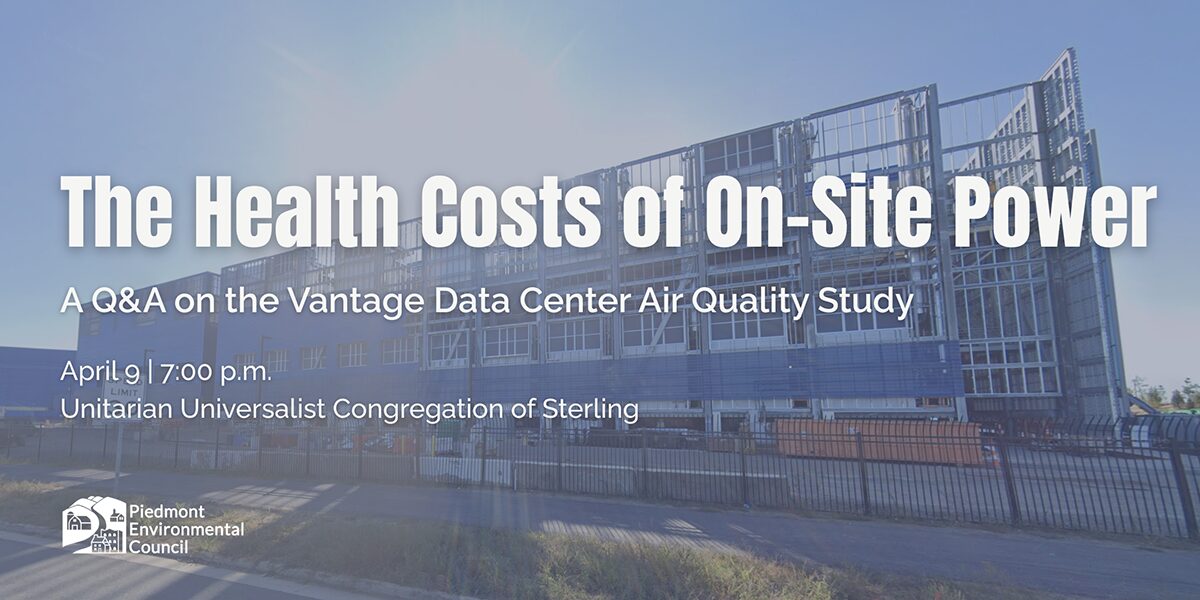
I’m writing to share a data center air quality study we recently commissioned that showed some alarming results, and to invite you to an event in Loudoun on Thursday, April 9 to learn more about the study findings and how they impact you, and what you can do.
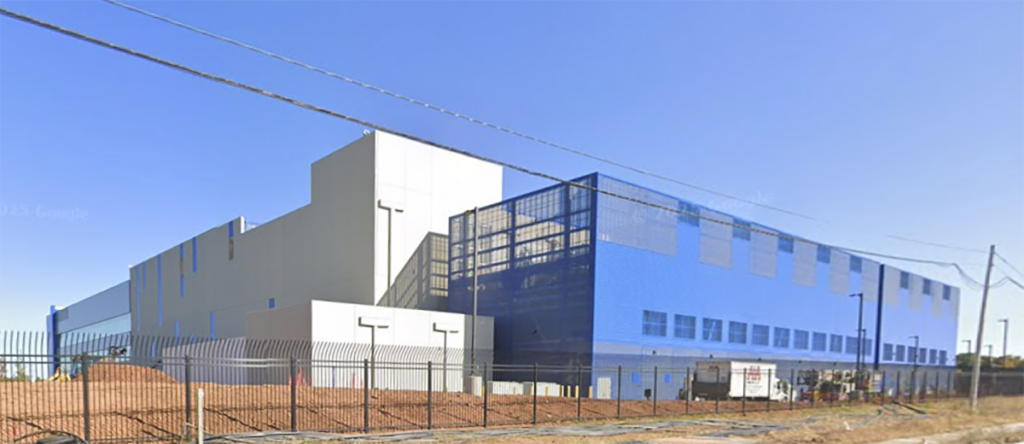
PEC recently released a study that examined the pollution from a local data center, Vantage VA2 (22435 Glenn Dr., Sterling). We chose to research this site because it is the only data center powered by onsite gas turbines that we know of in Virginia. Yet, we also know there are more planned or proposed. For that reason, we felt it was important to research the impacts on public health from this type of power.
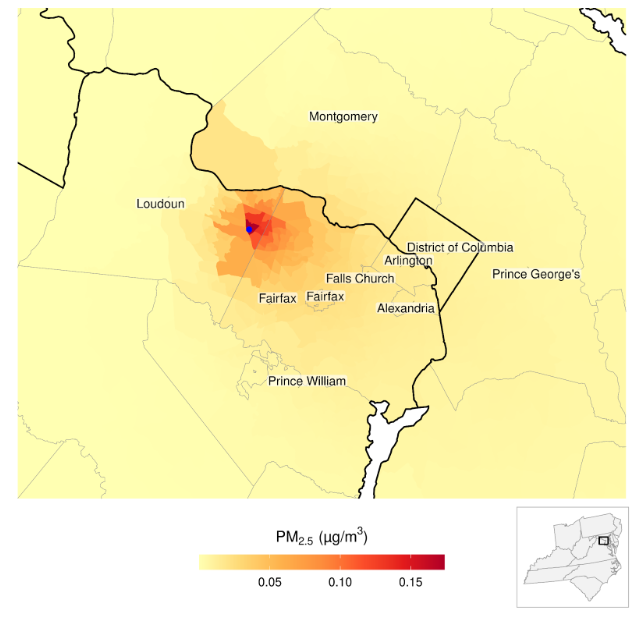
The air study, which we commissioned with the Harvard-affiliated EmPower Analytics Group, evaluates the potential public health and economic impacts of fine particulate matter (PM2.5) emissions permitted at Vantage VA2 for their on-site power system.
The study revealed that the data center’s onsite power generation, using natural gas combustion turbines, could cause significant air pollution, resulting in $53 million–$99 million per year in health-related damages, primarily from premature mortality, as well as respiratory and cardiovascular disease.
Particulate pollution from the Vantage VA2 campus alone will reach more than 2.5 million people – part of an emerging public health threat throughout Northern Virginia and the Washington metropolitan area – with the highest estimated annual-average increases in PM2.5 occurring in Sterling, Dulles Town Center, Oak Grove and Dranesville.
Join Us to Learn More and Ask Questions About How This Impacts You
We will be hosting an in-person event on Thursday, April 9 from 7 – 8:30 p.m. in Sterling to present the findings of the study and provide an opportunity for residents to talk with lead researcher, Michael Cork, about the impact of the Vantage VA2 data center on air quality in their neighborhood. We hope you’ll join us!
The Health Costs of Onsite Power: A Q&A on the Vantage Data Center Air Quality Study
When: Thursday, April 9 from 7 – 8:30 p.m.
Where: Unitarian Universalist Congregation of Sterling
22135 Davis Drive, Suite 104
Sterling, VA 20164
* The event is free, but space is limited, so be sure to register to secure your spot.
Why We Conducted This Study
PEC funded this analysis, using standard EPA models, because neither the Virginia Department of Environmental Quality (DEQ) nor the Washington Metropolitan Council of Governments (WMCOG) have provided any public monitoring or modelling of the potential public health and environmental impacts of onsite generation at the hundreds of data centers in the region. To date, Virginia DEQ has permitted approximately 10,000 generation units (primarily backup generators) across those data centers.
Further, as the demand for power from data centers continues to outstrip supply, with years-long wait times for data centers to be hooked up to the power grid, more and more data center sites are considering full-time power generation onsite.*
* Other data centers currently do use onsite generation for back-up power in emergencies, but not for 24-7 full-time power.
Why Vantage VA2?
Every data center in Loudoun has many dozens of train-car sized backup diesel generators to run in the event of a power outage. In fact, Loudoun has more than 4,000 of these generators, and while they are currently permitted to run only in grid emergencies and for periodic maintenance testing, they are still a considerable pollution source. Vantage VA2, however, is the first data center in Loudoun that not only has back-up diesel generators, but that also runs 24/7 on natural gas turbines as its primary power source.
The emissions from Vantage’s turbines and generators are overseen by DEQ, which issued the air permit. Unfortunately, if the emissions stay below set pollution thresholds, they can be permitted under the minor air permit, which does not require public hearings (unless one is requested). This continues to be a problem, since our study found the emissions at the Vantage VA2 data center, which DEQ permitted as a “minor” rather than “major” source, are still very impactful. A lack of public notice in the state permit process meant Vantage took its neighbors by surprise and effectively created a local gas plant, tucked onto a data center site.
Why didn’t Loudoun address it?
In March 2023, Vantage Data Centers got approval from Loudoun’s Board of Supervisors to build an 800,000-square-foot data center campus in Sterling. However, eight months earlier, Dominion Energy had announced that it was reaching a pinch point on the electrical grid and couldn’t provide enough power for new Loudoun data centers until at least 2025 or 2026. (Since then, wait times have only gotten longer and are now estimated at up to seven years, as data center demand has increased.)
Vantage didn’t want to wait that long, so in June 2023, it quietly made a change to its site plan, adding eight natural gas turbines.At the time, the data center definition within Loudoun’s Zoning Ordinance included “associated utility infrastructure,” and because the change remained within the placement of previously-shown facilities, it required no additional review. (Since then, Loudoun has updated its data center definition to exclude associated utility infrastructure and require a special exception for power generation facilities.) In this way, without the knowledge of its neighbors, Vantage VA2 became the county’s first, and so far only, data center “microgrid” – a small-scale, independently-run power grid (in this case, operated by the data center on natural gas turbines).
Are there more planned?
Yes. Natural gas microgrids are being proposed in multiple places, including another site in Loudoun. Owned by Digital Realty,the Digital Dulles project (previously Western Lands) proposes 23 natural gas turbines, almost three times as many as the Vantage facility, at a site near Loudoun Valley Estates. Thankfully, with the county’s change to its definition of a data center, Digital Dulles will have to go through a public special exception process for that gas plant. We have also requested a DEQ public hearing on the air permit. Look for more information from us on those soon.
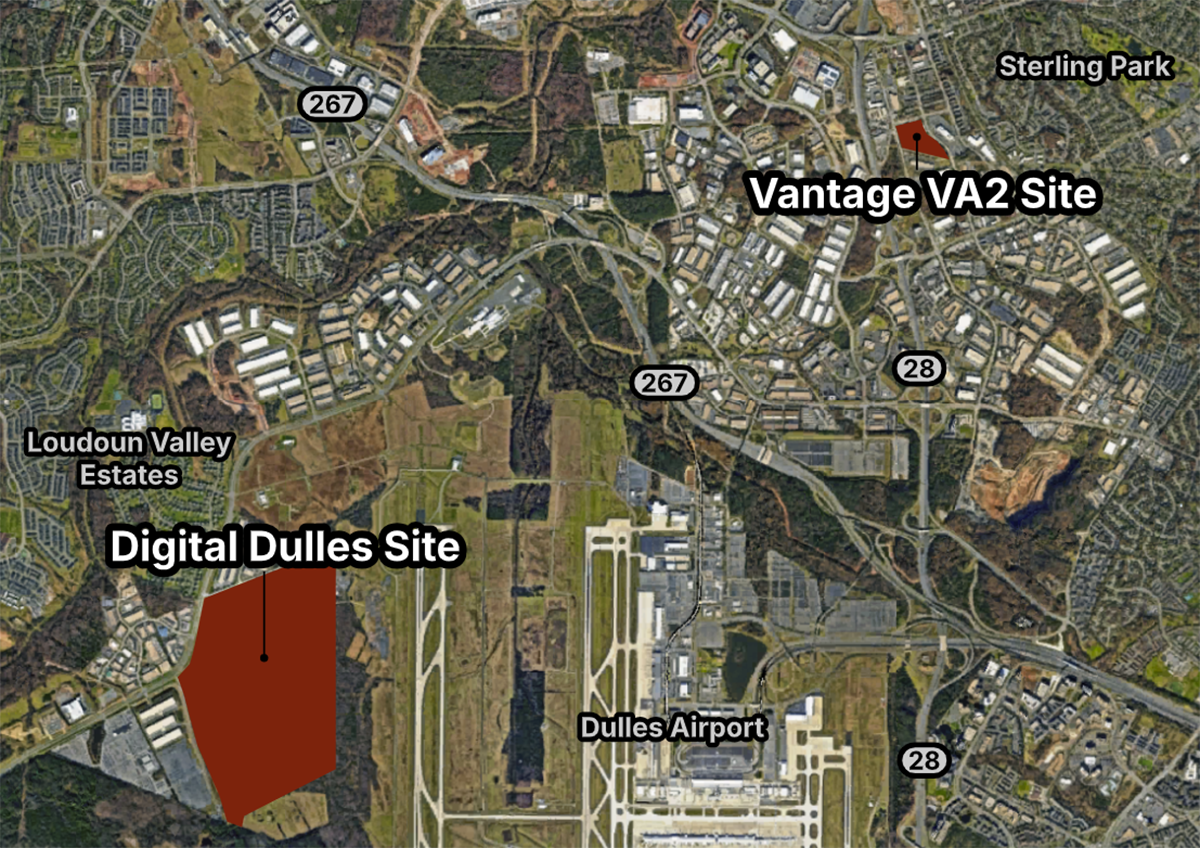
In the meantime, Vantage VA2 offers an important case study, not just for Loudoun, but anywhere data centers are considering onsite power. On Thursday, April 9, we will discuss the air quality impacts, answer questions, and share what you can do next.
We hope to see you there! In the meantime, feel free to reach out with any questions.
Sincerely,
Emily Johnson
Land Use Field Representative
Loudoun County
[email protected]
(540) 347-2334 x7044