
At lunch during PEC’s Wildlife Friendly Habitats and Gardens Tour in Clarke County, the group was joined by a barn owl, a screech owl, and a red tailed hawk. The sharp-beaked raptors sent smaller birds darting in agitation among the nearby trees, even though they were perched on the hands of their human keepers. The three raptors—called Lamont, Fiona and Briar—were rescued by the Blue Ridge Wildlife Center in Millwood, but unlike most of the animals rehabilitated at the center, they couldn’t be released because of injuries that leave them incapable of surviving in the wild. So, they’ve become part of the center’s educational programs—in this case, giving people who are interested in building wildlife habitat on their land a look at some of the species that might thrive there.
PEC
Radioactive Rivers
Beneath the rolling landscapes of Culpeper, Fauquier, Madison and Orange are deposits of the radioactive mineral uranium — potential mine sites. In the 1980s, companies filed mining leases on thousands of acres of land in these counties, as well as in southwest Virginia, with an interest in extracting the uranium, which can be processed into nuclear fuel.
Because uranium mining poses severe dangers to public health and the environment, PEC fought to prevent it, helping to secure a statewide moratorium on uranium mining in 1982. This ban is still in effect. But a Canadian-backed company called Virginia Uranium, Inc. is now pushing to mine a large deposit in southwest Virginia.
A Walk Through Bird and Butterfly Paradise
Fifteen years ago, Bruce Jones’ research led him to the discovery that, in his words, “Native plants are the basic building blocks for the whole ecology of our area.” So, he and his wife Susan began the epic project of replacing invasive plants with native plants on about 87 acres of their property, now known as the Jones Nature Preserve.
What is a Conservation Easement?
A conservation easement is a land preservation agreement between a landowner and a governmental or non-profit conservation organization that places permanent limits on the future development of a property in order to protect the conservation values of the land. The easement may also specifically protect natural, scenic or historic features of the property.
Fellowship Program – Five Years In
This summer marked the fifth year of the PEC Fellowship Program, which is becoming a nationally known educational program for students with an interest in environmental work. Each year, twelve college students, graduate students, and recent graduates spend seven weeks with us, gaining hands-on experience in a wide range of environmental fields
Virginia Uranium Company Pushing to End the Ban in 2012
On the day that an earthquake struck Virginia, as the region prepared for a hurricane, representatives of Virginia Uranium found themselves addressing the City Council of Virginia Beach, to explain why containment pits of radioactive mine tailings upstream would not pose a danger to the city’s water supply.
The timing of that meeting could have gone better for them. Still, they asserted that they’ll be able to mine uranium safely in Virginia. It’s a tall order—considering that the piles of hazardous mine wastes would cover hundreds of acres.
Double Bypass
If there’s one thing that’s been bypassed in the ongoing push for new roads around DC and Charlottesville, it’s public process.
First, in May, the Commonwealth Transportation Board (CTB) revived plans for a developers’ dream road around DC—the vast Outer Beltway. The unelected CTB brought back the Outer Beltway without consulting local governments, without a recommendation from VDOT, and without any public input.
Uranium Here
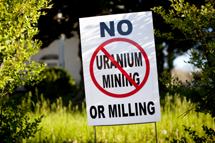
In 1979, Bill Speiden was offered a lease for uranium mining and milling on his Orange County farm. That uranium hasn’t gone anywhere.
The debate over uranium mining and milling in Virginia is coming to a head, with a much-awaited study from the National Academy of Sciences due to be released in December. Proponents are pushing the General Assembly to end the state’s ban on uranium mining in the January 2012 session. The stakes are high; not just for southwest Virginia, but for the entire state—including the Piedmont.
Our Strategic Plan
In 2010, the PEC Board adopted an update of our Strategic Plan, setting goals and establishing a plan of action for the next 5 years.
Our Mission
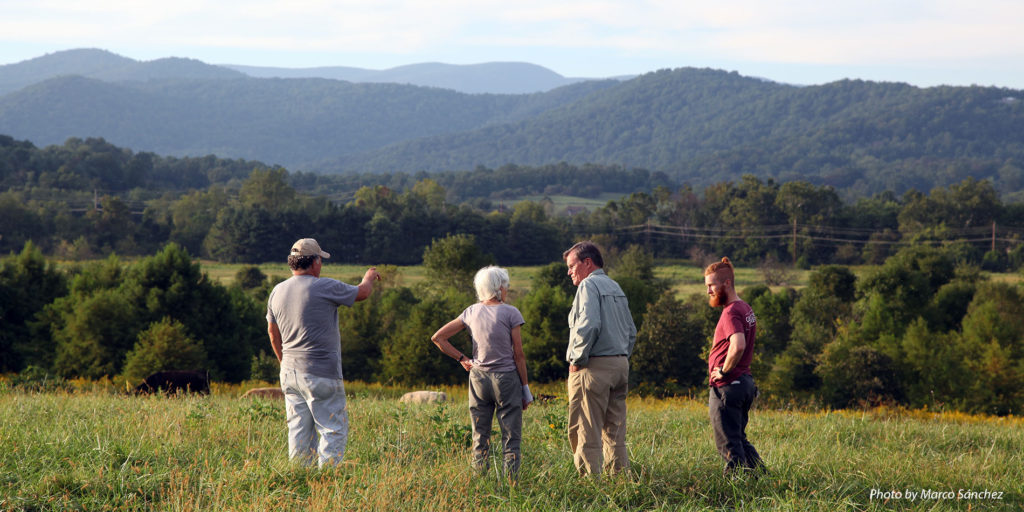
Virginia’s northern Piedmont is an exceptional place. Located at the foot of the Blue Ridge Mountains, the Piedmont is beloved for its scenic beauty, unparalleled in its significance to America’s history, and valuable for its productive family farms, thriving communities and vibrant economy. Its forests, fields and wetlands provide clean water for the people of this region as well as those downstream, and they offer bountiful habitat for numerous species of wildlife and native plants. This splendid natural setting, together with its distinctive towns and cities, make the Piedmont a wonderful place to live, work and visit.