
PEC’s Community Farm at Roundabout Meadows connects area residents to Loudoun’s vital agricultural history while providing locally-grown fruits and vegetables for its food-insecure population today.
Produce Donations
Over 98% of the produce grown at the Community Farm at Roundabout Meadows is donated to area hunger relief organizations. Since 2019, we have donated over 240,000 pounds.

Volunteers
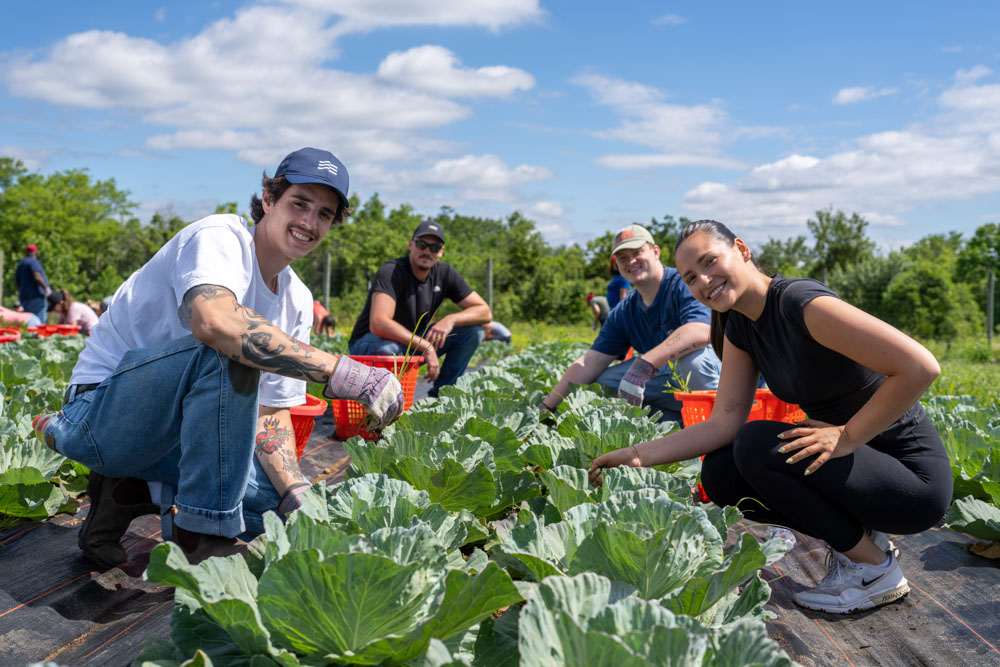
Over 1,500 hours of service are donated annually by Community Farm volunteers of all ages. Volunteers include community members, students, corporate groups, faith-based organizations and many more!
Growing Practices
The Community Farm is proud to be Certified Naturally Grown. As a working vegetable farm, we build healthy soil by planting cover crops and spreading compost and organic amendments. We practice crop rotation to reduce pests and disease, limiting the need for organic pesticides.
Volunteer at the Farm
Since our first season in 2019, PEC’s Community Farm at Roundabout Meadows has donated almost all of what is grown on the farm to area hunger relief organizations. This would not be possible without the assistance of our incredible team of volunteers, who dedicate hundreds of hours to help with lots of different farm tasks. Whether you’re a group searching for a team-building event, or an individual or family looking for a healthy way to support your community, the Community Farm is happy to host you and grateful for your time. Learn more and sign up →
“Volunteering at the farm has become one of the best parts of my week. It’s a great way to step away from the usual routine, being outside in different kinds of weather and getting a little mud on my knees and dirt under my nails. Each day brings a new lesson, from how to plant properly to when a vegetable is perfectly ready to harvest. I love watching how quickly the farm landscape changes from week to week. It feels like a small miracle unfolding as I watch tiny seedlings grow into full, thriving crops through the spring and summer. Knowing that everything goes to local families in need makes it feel truly meaningful. And the people here are so inviting and fantastic. We share great conversations about gardening, cooking, travel, sports, and more while we work, and sometimes it’s just nice to enjoy the quiet and calm of the farm. Another great part is that I did not need any farming experience to join, just a willingness to pitch in, learn, and have fun outdoors. It’s such a fulfilling way to connect with others and give back to the community.”
– Aaron Mazzatenta
“ I’ve enjoyed volunteering at the farm the past two years. A farm that grows fruit and vegetables to donate to local food banks was what first drew my interest. Learning that the farm was on land preserved from future development was also of interest. One of the main reasons I keep coming back is the farm staff. They are friendly, very knowledgeable and do a good job of explaining the planting/harvesting process.
I highly recommend the farm to anyone looking to volunteer that enjoys being outdoors, working with your hands, and interacting with some nice people while helping your neighbors and the environment.”
– Dennis Thomas
Volunteer requirements
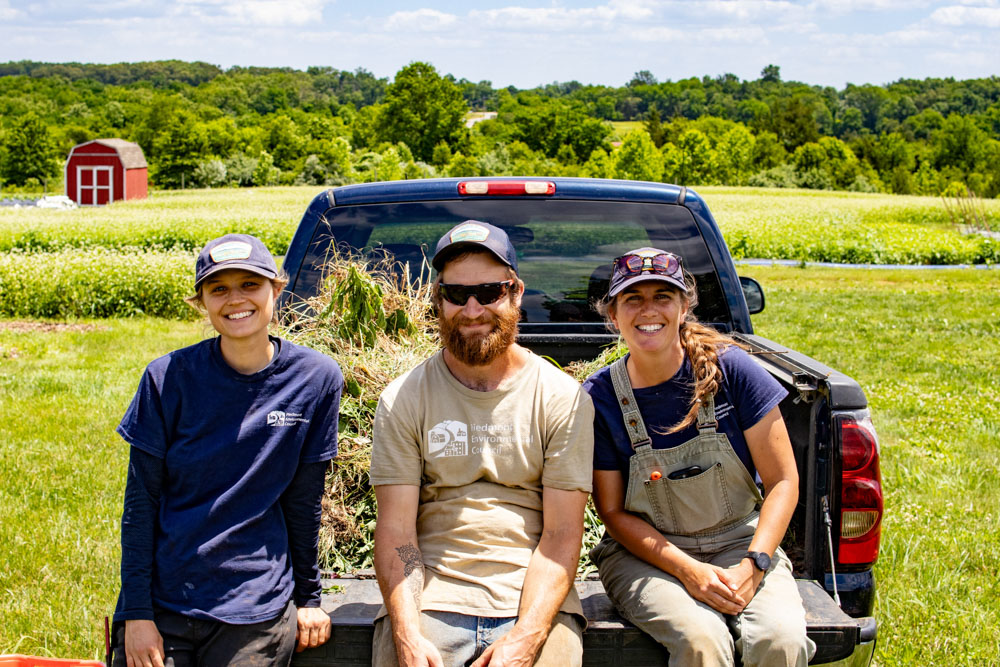
All ages and skill levels are invited to volunteer at the Community Farm, and no previous experience is required. An adult must accompany children under the age of 16. All volunteers are required to complete a waiver when they sign up.
Volunteers are encouraged to bring water, snacks, sunscreen/insect repellent, gardening gloves if they have them, and to wear closed-toed shoes and clothes that can get dirty. There is a porta potty, washing station and hand sanitizer on site.
Hours of operation
Our volunteer season runs from March–October. Due to our partner’s availability to pick up produce, the majority of time slots are Tuesday & Thursday mornings, as well as two Saturdays per month.
Farm tasks
Volunteer opportunities include a range of different farm tasks, including seeding, planting, harvesting, weeding, and more. While helping their community, volunteers also learn more about the local food system and hopefully pick up a few tips on growing their own fruits and veggies at home!
Volunteers can also sign up at letsvolunteer.org, loudouncares.org and volunteermatch.org.
Corporate team-building and private group (e.g. faith-based, scouts, clubs, etc.) days are also available (minimum group size is 15). For corporate and group inquiries, contact Lea Justice, Volunteer Coordinator at [email protected] or 540-347-2334×7027.
Our Mission to Feed
The Piedmont is one of the wealthiest, most rapidly growing regions in the country. According to data from Feeding America, within PEC’s nine-county region, there is an annual food budget shortfall (the additional dollar amount needed to purchase just enough food to meet individual needs) of over $58 million dollars. In Loudoun County alone, over 32,000 individuals are experiencing food insecurity, meaning that they sometimes or often don’t know if they will have enough food. Since 2019, The Piedmont Environmental Council has been working to help improve access to high-quality fruits and vegetables for those in need in our region through our work at the Community Farm at Roundabout Meadows.
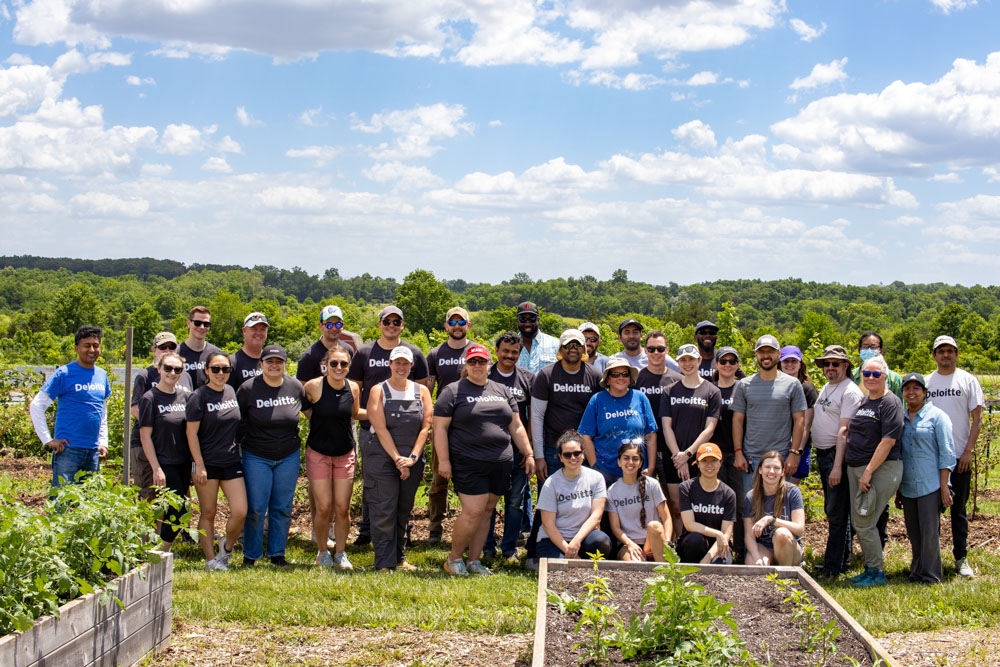
For PEC, the Community Farm is an important door to our community, not only fighting food insecurity in our region but also providing opportunities for community members to experience the sensation of soil between their fingers and to learn the joys of sustaining life through gardening and farming while also serving those in need.
In its first season, the farm produced almost 5,000 pounds of fresh fruits and veggies including potatoes, tomatoes, squash, and melons. Since then, we have donated over 224,000 pounds of regeneratively grown food to Loudoun Hunger Relief. Through our partnership with Loudoun Hunger Relief, the produce grown at the Community Farm goes directly to those who need it most as well as 15 other partner organizations. In 2023, we welcomed two new partners, Christ Church Cares and FISH of Clarke County. In 2026 we will be adding two new partners, Windy Hill Foundation and Seven Loaves Services, both of whom serve Loudoun and Fauquier Counties, expanding the distribution of the Farm’s produce into three counties within PEC’s operating region.
Current events have put healthy, local food outside the financial means of many families. Food costs have skyrocketed due to inflation and funding has decreased for critical programs such as SNAP. As our nation has suffered food supply chain breakdowns, our local food pantries have continued to serve increased numbers. In response, we have continued to expand our production, adding a high tunnel and prioritizing staple crops while building soil to ensure we can sustain our commitment to fighting food insecurity.
Our Sustainable Practices
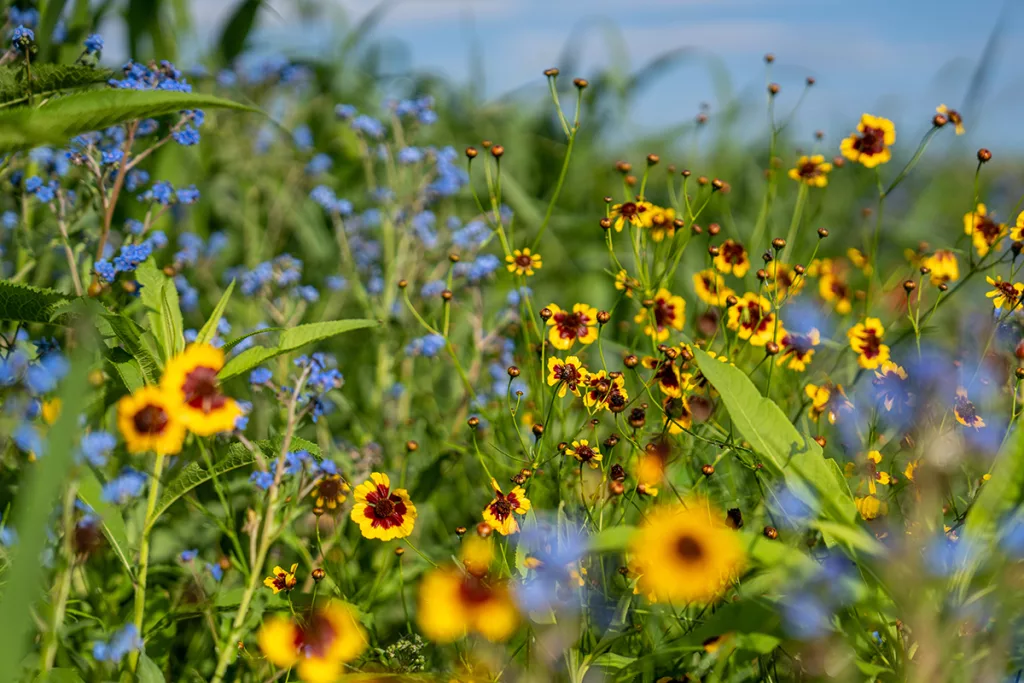
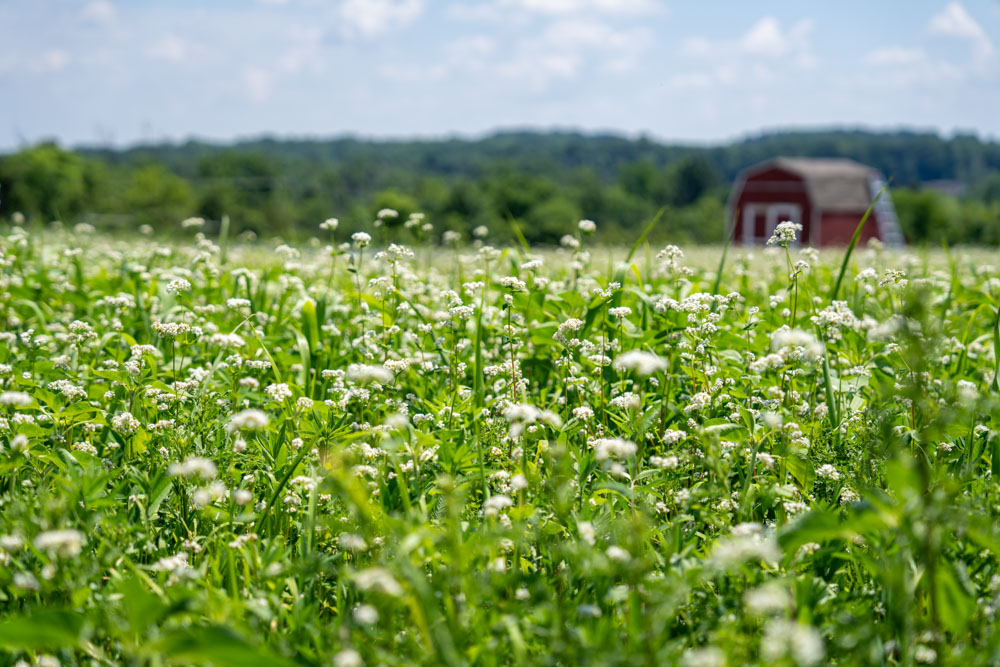
A crucial part of the Community’s Farm mission, and one that goes hand-in-hand with successful farming, is building soil health and sharing what we learn with our community.
On a working vegetable farm, building healthy soil is accomplished through a combination of cover cropping, cultural practices and Organic amendments. The Community Farm uses these tools and techniques to practice the soil health principles outlined by 4 The Soil, a program of the Virginia Soil Health Coalition and Virginia Cooperative Extension. These principles include: keeping the soil covered, minimizing soil disturbance, maximizing living roots and energizing with diversity.
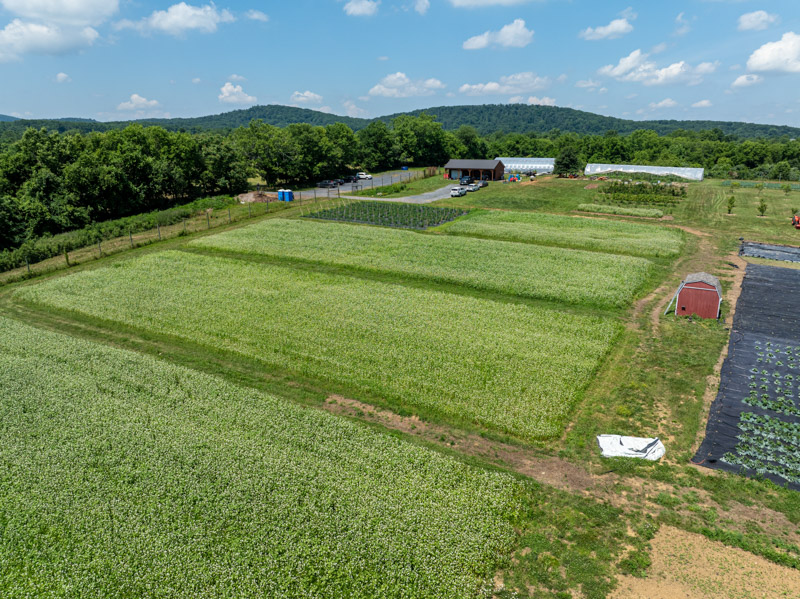
Cover crops achieve each of these four principles and are the main source of carbon on the Community Farm. They also fix nitrogen, add organic matter to the soil and out-compete weed species. In 2024, we devoted 35% of our total growing space to year-long cover cropping with plans to continue this soil building project each year.
.
Cultural practices on a farm cover a broad range of activities that manage the farm’s crops and soil. The Community Farm prioritizes practices that minimize soil disturbance and do not invert the soil layers, such as using reusable landscape fabric and tarps to smother weeds and eliminate cover crops or old vegetable crops to prepare the soil for planting. In 2023, we also invested in new tractor implements that reduce compaction and improve overall soil structure.
All amendments used on the Community Farm are certified Organic, and no herbicides are used in crop growing areas to prevent chemical soil disturbance. Rotating crop families around the farm reduces pest and disease pressure and the need for organic pesticides and fungicides. Extensive soil testing also allows us to take a targeted approach to fertility amendments, reducing the chance of nitrogen runoff into Howser’s Branch while maintaining the optimal growing conditions for our vegetables.
In 2025, the Community Farm became Certified Naturally Grown which further defines the practices and inputs used on the farm.
Agrivoltaics
In the summer of 2025, on a quarter-acre section of the Community Farm, PEC installed 42 solar panels mounted 6-8 feet high.The project, the first of its kind in Virginia, has rows of vegetables planted between the panels and serves as a demonstration project to study and show how the dual-use of land for both agriculture and energy generation can help meet clean energy goals while keeping land in farming.

Interested in seeing the project in person? — sign up for a tour!
The solar array generates 130% of the energy needed for the farm’s operations. The additional production allows for future expansion of farm electrical systems. PEC elected to include built-in battery backup, so the farm can keep running essential operations—e.g., well pumps, produce cooling, greenhouse, etc.—even when the electrical grid goes down. While it is an added optional cost, those batteries can do double duty, generating income for farmers by selling excess power back to the grid during peak demand periods, essentially functioning as a small, clean power plant.
Visit Us at Gilberts Corner
There are several management areas within the 172 acres owned by PEC at Gilberts Corner, which also includes our Gilberts Corner Farmers Market and the Old Carolina Road Trail. The Community Farm is located on approximately 40 acres within the triangle created by the traffic circles at Howsers Branch Road, Route 15 and Route 50. The address is 39990 Howsers Branch Dr., Aldie, VA 20105.
Questions? Contact Community Farm Manager Teddy Pitsiokos at [email protected] or (540) 347-2334 x7069.