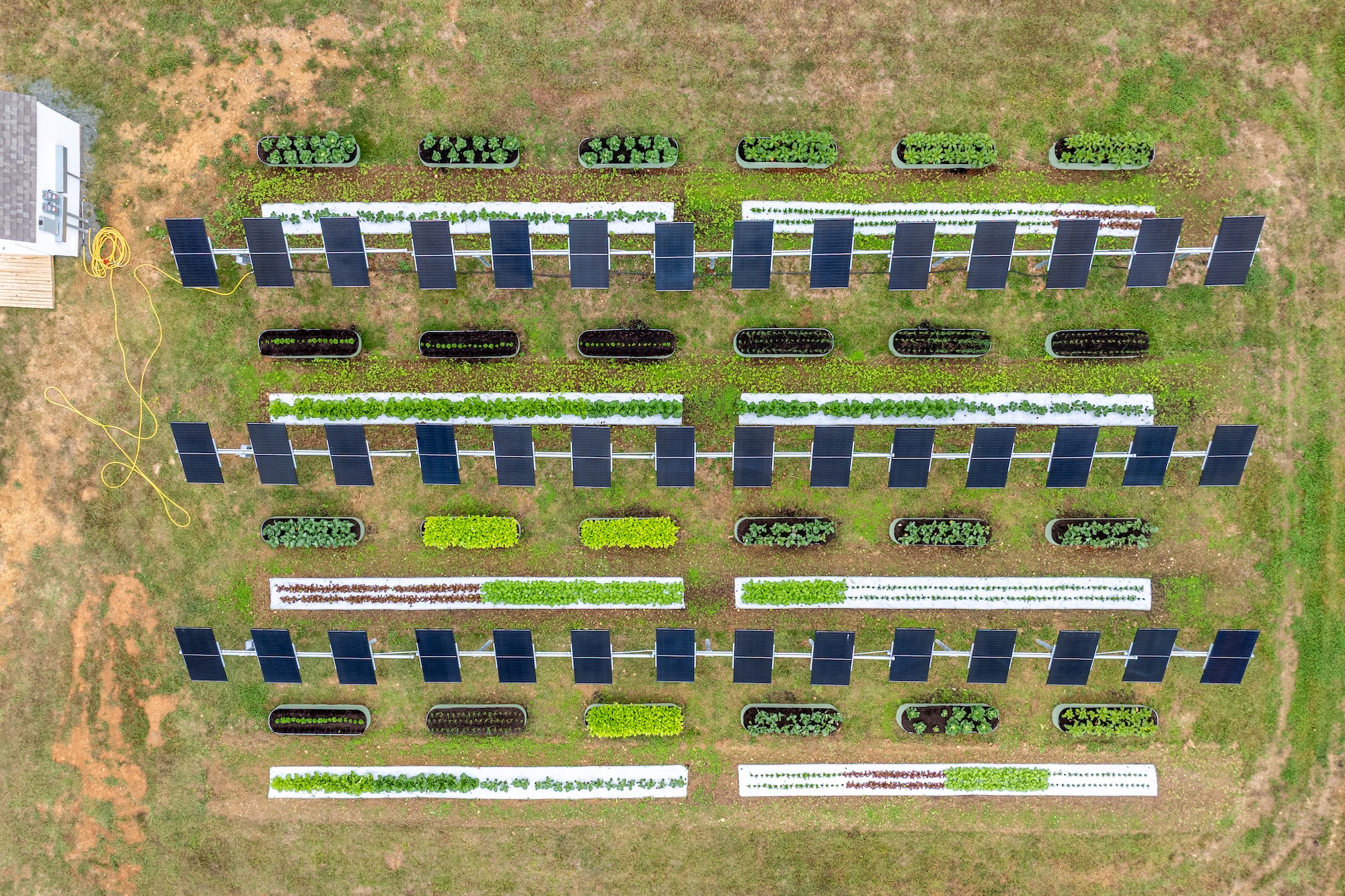
WARRENTON, Va. (March 24, 2026) – The Piedmont Environmental Council (PEC) is pleased to announce an $11,000 grant from the Land and Climate Grant Program, managed by the Land Trust Alliance and Open Space Institute, to help launch an initiative to develop easily replicable agrivoltaics projects for the benefit of urban and low-income communities. Agrivoltaics combines food production with on-site clean energy generation on the same plot of land.
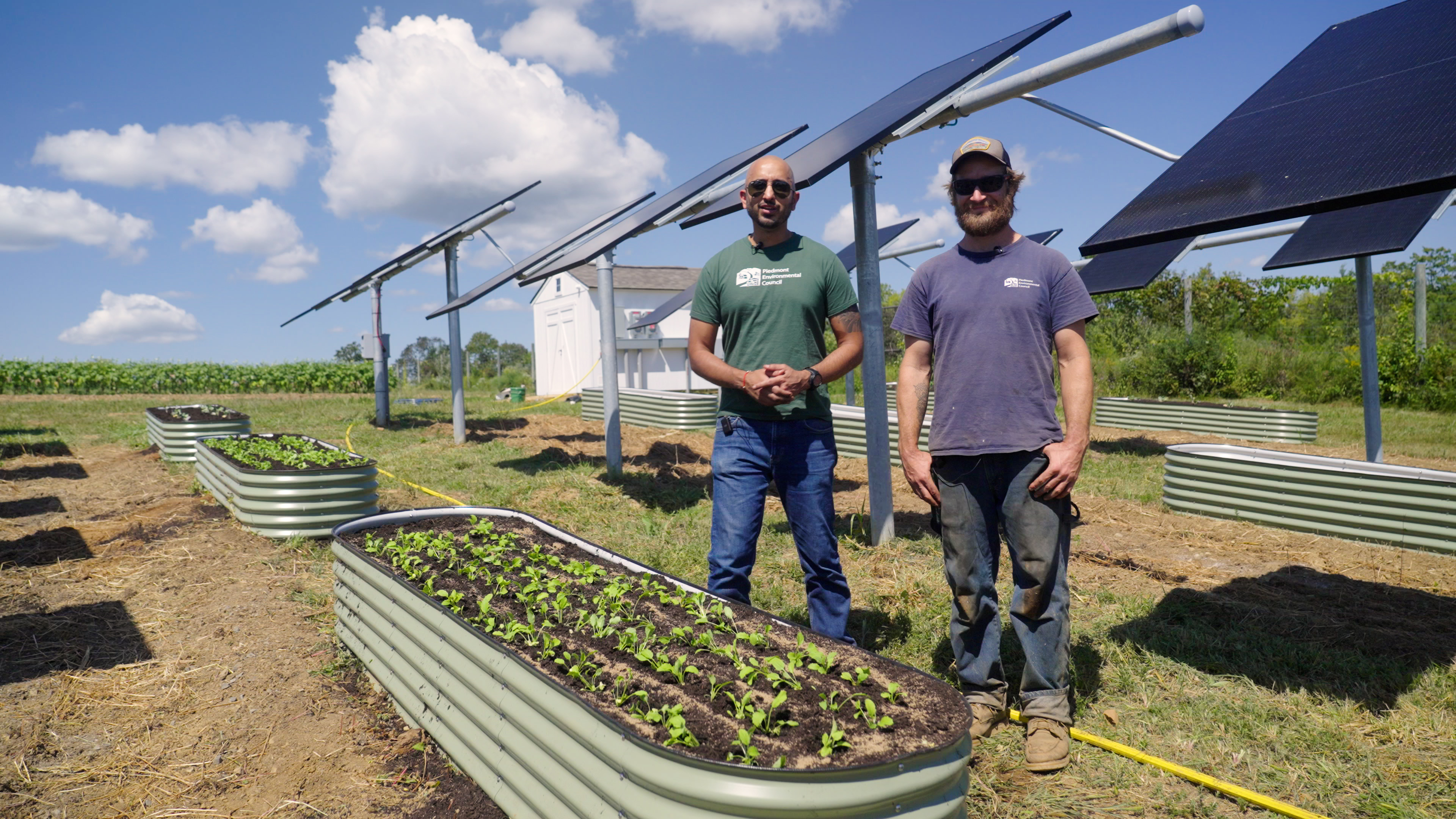
“Our training and outreach events aim to teach others how to combine solar and agricultural production in low-income and urban parcels, including parking lots or other previously disturbed land,” said PEC Senior Climate and Energy Advisor Ashish Kapoor. ”We hope to demonstrate how urban farmers and other community members can save money on escalating utility bills and produce food for their communities in the same space. These events will broaden awareness of the effectiveness of smaller scale distributed generation and encourage further legislative efforts to promote agrivoltaics.”
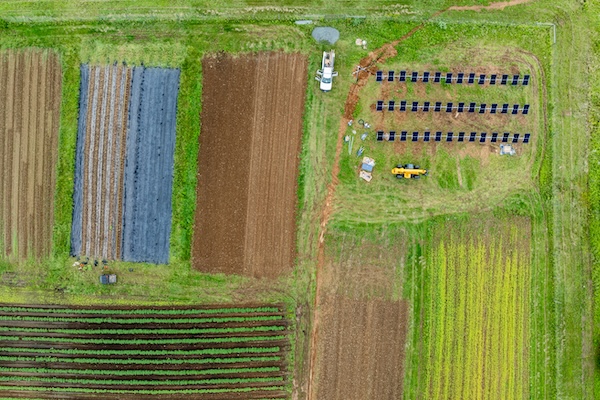
Using data gathered during a university research partnership forged during PEC’s parking lot solar bill effort in 2024, as well as U.S. Census and Neighborhoods at Risk data, PEC will identify urban settings and communities affected by climate change and well-suited for small-scale agrivoltaics. PEC will host community leaders, urban farmers, rural business owners and other potential partners for site visits and community education events at its Community Farm. The farm, located in Aldie, Virginia, hosts Virginia’s first crop-based agrivoltaics project. As part of the initiative, PEC’s first “Solar for the Ag Community” event will take place at the Community Farm on Earth Day, April 22.
“By demonstrating the value of solar in small, pragmatic ways that benefit farmers, dual-use agrivoltaics projects combine conservation priorities and solar development,” said PEC President Chris Miller. “As landowners and investors in food production to support local and regional food security programs, we are excited to be producing more than enough energy to cover our needs on the farm and know that we are generating clean energy for the grid. We’re grateful for this Land and Climate Grant Program award that will allow communities to receive the climate, food production and open space benefits of land while also strengthening energy independence, protecting farmers from rapidly escalating utility rates.”
During the grant period and beyond, PEC plans to engage with universities throughout the Commonwealth and farm-focused organizations within the PEC’s nine-county service region — Albemarle, Clarke, Culpeper, Fauquier, Greene, Loudoun, Madison, Orange, and Rappahannock, plus the City of Charlottesville — and support projects within the participants’ respective regions. The events will also expand institutional knowledge about agrivoltaic project development within the industry.
The public outreach and training for landowners and communities is taking place as legislators at the 2026 General Assembly session are demonstrating bipartisan support for agrivoltaics. PEC, with the Virginia Farm Bureau, co-led the development of HB 508 / SB 340, a bill that has passed out of both chambers and onto Gov. Spanberger’s desk. This legislation will define agrivoltaics in Virginia and create a building block for best practices and future incentives for dual use solar. This will serve as important steps to further technological adoption across Virginia farms.
This grant to PEC is part of a $243,000 award that the Land Trust Alliance and the Open Space Institute are distributing this year to help communities across the country better plan for and mitigate the impacts of climate change. The program is generously funded by the Doris Duke Foundation, Jane’s Trust Foundation, the J.M. Kaplan Fund and the Volgenau Foundation.
“Land trusts are on the front lines of environmental protection. Through the Land and Climate Grant Program, we are empowering local organizations to harness the power of science and strategic land protection to combat the impacts of extreme weather and climate change, protect biodiversity and strengthen communities,” said Erik Kulleseid, OSI’s president and CEO. “We are proud to support this vital work that helps protect communities and natural landscapes today and for generations to come.”
“Land conservation has a key role to play in tackling climate change,” said Kelly Watkinson, land and climate program director at the Land Trust Alliance. “Land trust actions at the local level can have a global impact on our climate. Every acre protected and well-managed can be part of the solution. The Land and Climate Grant Program, operated in tandem with the Open Space Institute, supports land trusts that are developing and implementing climate-informed land conservation and stewardship strategies into their everyday work.”
In the five years since the Land and Climate Grant Program’s launch, the organizations have awarded more than $1.6 million in support of 133 projects led by 116 different organizations in 35 states and Puerto Rico, for projects that address the climate crisis.
Media Contact: Elizabeth Ransom, Media & PR Specialist, [email protected]; 540-347-2334, x7029
###
The Piedmont Environmental Council (PEC) works to protect and restore the lands and waters of the Virginia Piedmont, while building stronger, more sustainable communities. Founded in 1972, PEC is a locally based, community-supported 501(c)3 nonprofit and accredited land trust. At the core of PEC’s approach is a focus on educating, engaging and empowering people to effect positive change in their communities.
Founded in 1982, the Land Trust Alliance is a national land conservation organization working to save the places people need and love by empowering and mobilizing land trusts in communities across America to conserve land for the benefit of all. The Alliance represents approximately 1,000 member land trusts and affiliates supported by more than 250,000 volunteers and 6.3 million members nationwide. The Alliance is based in Washington, D.C., with staff working in communities across the U.S.
The Open Space Instituteis a national leader in land conservation and efforts to make parks and other protected land more welcoming for all. Since 1974, OSI has partnered in the protection of more than 2.5 million at-risk and environmentally sensitive acres in the eastern U.S. and Canada. OSI’s land protection promotes clean air and water, improves access to recreation, provides wildlife habitat, strengthens communities, and combats climate change, while curbing its devastating effects.
The Doris Duke Foundation (DDF)supports the well-being of people and the planet for a more creative, equitable and sustainable future. We operate five national programs — in the performing arts, the environment, medical research, child and family well-being and mutual understanding between communities — as well as Duke Farms and Shangri La, two centers that directly serve the public. Through the Environment Program, DDF seeks to ensure a thriving, resilient environment for wildlife and people, and foster an inclusive, effective conservation movement.