This text was taken from an email alert sent out on October 20, 2025. Sign up for email alerts →
Dear Supporter,
Clean water and healthy soil are paramount to public health and viable local food production. The presence of PFAS, or “forever chemicals,” in biosolids is a threat to both. Despite this, America’s largest biosolids land-application company (Synagro) wants to continue spreading PFAS-contaminated biosolids on farmland across Orange County, including fields adjacent to Pamunkey Creek, which already has elevated levels of PFAS contamination.
Join us at a public hearing this Thursday, Oct. 23 to urge the Virginia Department of Environmental Quality (DEQ), which issues the permit, to act to protect farmland, farm families and public health. This opportunity for public engagement is happening thanks to your advocacy after we highlighted the issue in July and urged you to request a public hearing.
Please take advantage of it!
Public Hearing on Synagro Biosolids Permit
Thurs., Oct. 23 @ 6:30 p.m.
11282 Government Center Drive, Orange
(DEQ information briefing begins at 6 p.m.)
Synagro’s History of PFAS-Contamination
What goes on farmland goes into the soil and runs into our waterways. As we said in July, Synagro is seeking a permit to apply onto Orange County farmland biosolids sourced from wastewater treatment plants in Maryland, Virginia and Washington, D.C. Unfortunately, according to its permit application, Synagro will source these biosolids from 38 waste water treatment plants — 24 of which are known to be contaminated with PFAS.
—
What are PFAS or “forever chemicals”?
PFAS (polyfluoroalkyl substances) are a group of thousands of chemicals used in consumer products and industry that are harmful to both human and animal health as well as the environment. Known as “forever chemicals,” they do not break down, but instead build up and persist in our bodies, soil, water and wildlife. They contaminate drinking water, ground and surface waters, soil, livestock and crops. In 2024, the first federal PFAS drinking water standards were established with the declaration that there is no safe level of exposure to PFAS.
What are biosolids?
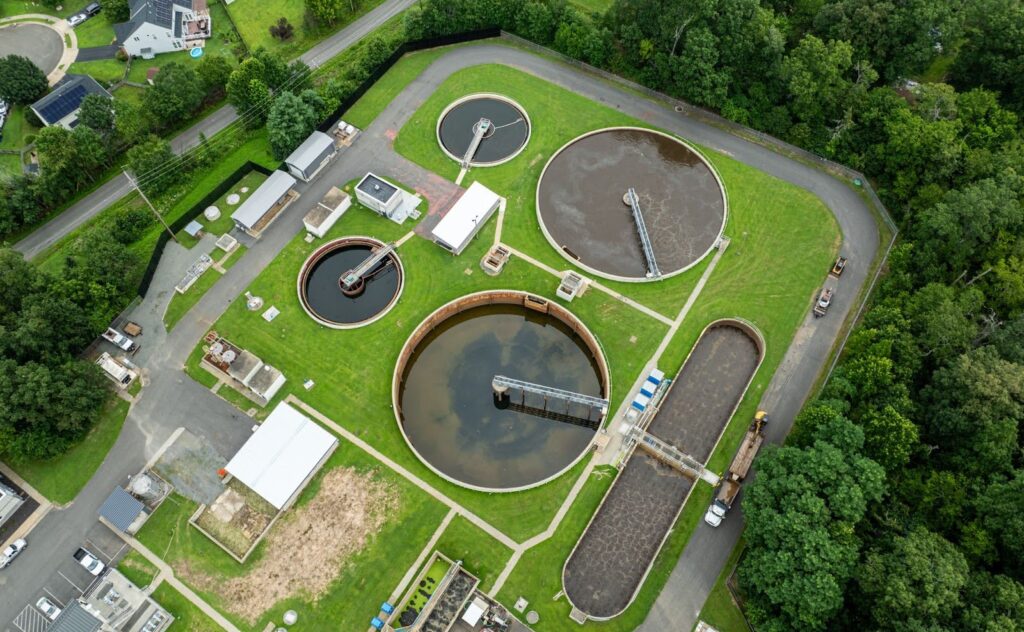
Wastewater treatment plants produce solid waste (“sewage sludge”) by removing regulated contaminants from wastewater. Refined, in part, from human and food wastes, sewage sludge is rich in nutrients. It is then treated to remove various toxic contaminants (e.g. heavy metals), dried and marketed to farmers by third parties, such as Synagro, as inexpensive fertilizer.
—
Sewage sludge can only be disposed of in three ways: 1) applied to the land as biosolids; 2) dumped in a landfill, or 3) incinerated. Because of PFAS contamination, there is no perfect solution. Although applying it to farmland can offer farmers an inexpensive source of fertilizer and reduce the use of carbon-intensive synthetic fertilizers, land application of biosolids contaminated by PFAS can result in an unacceptable level of risk to human health.
Unfortunately, Virginia does not require biosolids to be tested for PFAS. Though state law gives DEQ authority to impose testing, the agency has thus far failed to address PFAS-contaminated biosolids.
PEC wants DEQ to address the known presence of PFAS in biosolids destined for Orange County farmland and to provide farm families with complete information about what’s being spread on their land and crops.
Voice Your Concerns to DEQ by Friday, Nov. 7
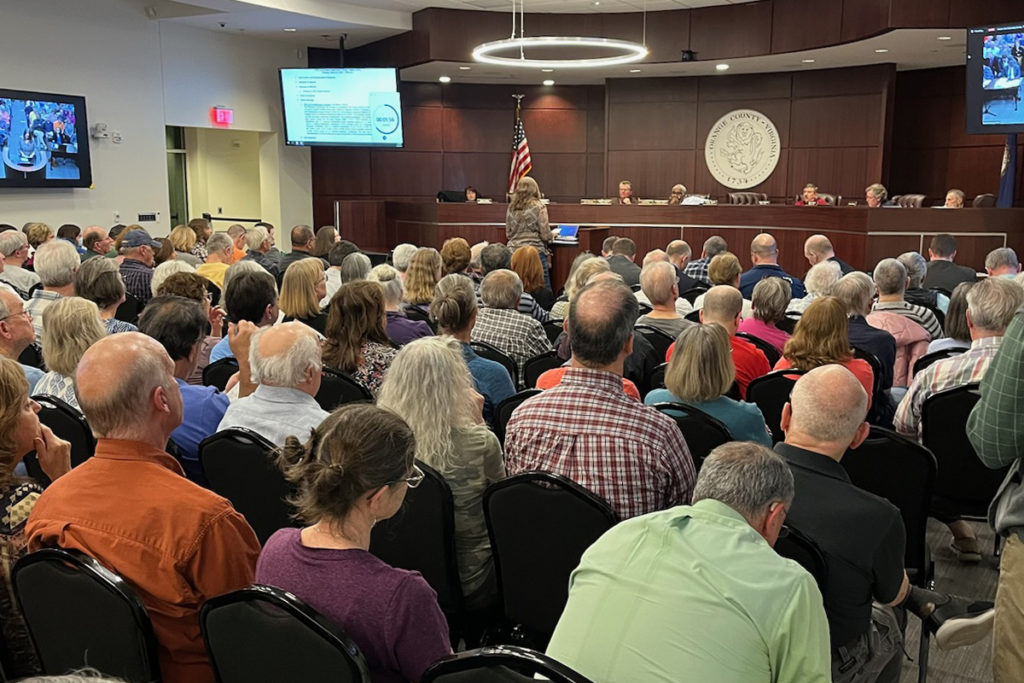
You have two further opportunities to voice your concerns to DEQ to influence its decision to approve or deny Synagro’s permit extension request.
- Speak at the Thursday, Oct. 23 Public Hearing
- Submit comments online by Nov. 7
After that date, DEQ will compile all comments and host a “Summary of Public Comments Public Hearing” before approving or denying Synagro’s permit. No new comments will be accepted at this second public hearing; only those individuals who comment by Nov. 7 will be allowed to speak, so make sure your voice is heard now.
How to Comment
You can speak for up to three minutes at the public hearing Thursday, Oct. 23 by writing your name on the sign-up sheet available on site before the hearing. You can also email, mail or hand-deliver your comments to DEQ. All comments must include your name and email or postal address and must be received by DEQ by Nov. 7.
Your email/letter should:
- State that you are commenting on “Permit Number VPA00075, Synagro Central, LLC. – Orange County”
- Be submitted to
- Stephanie Bowman, DEQ-BRRO, 901 Russell Drive, Salem, VA 24513, Phone: 434-598-0453;
- E-mail: [email protected]
- Share how you might be affected by PFAS-contaminated biosolids
- For example: I am a local resident who enjoys fishing, recreation, etc. in the Rappahannock, Rapidan or York River watersheds and I am concerned about contamination of my drinking water.
- For example: I support local farmers by buying and eating locally-produced food and I care about government transparency in the land application of biosolids.
- For example: The EPA has warned that PFAS present in sewage sludge that is used as fertilizer can pose human health risks. States like Maine and Maryland have taken regulatory action to protect residents from potential harms from “forever chemicals.”
We encourage those of you who previously sent in comments that resulted in this public hearing to send your comments in once again, so you can continue to be included in the process.
Feel free to email or call me if you have any questions. PEC and the local group who have organized around this issue, Don’t Spread On Me, hope to see you at the hearing this Thursday, Oct. 23!
Lastly, please forward this email to anyone interested in staying up to date on issues in the Town of Orange and Orange County. Or you can sign up for alerts here.
Thank you,
Don McCown
Land Use Field Representative
Madison and Orange Counties
[email protected]
434-977-2033, ext. 7047