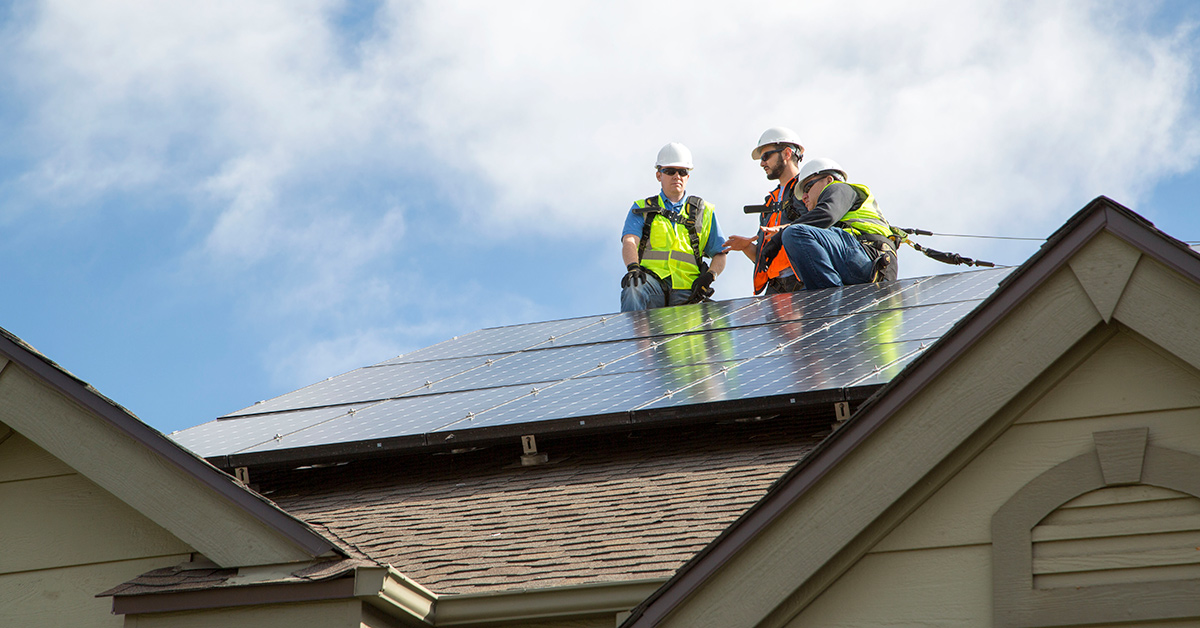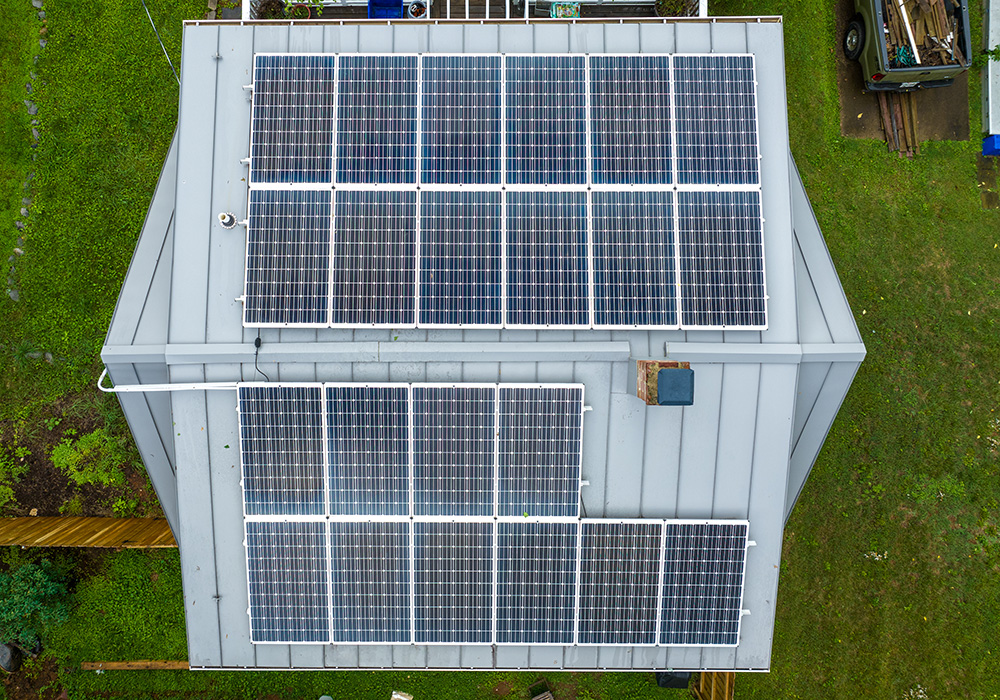

A rooftop solar installation in Virginia. Photo by Hugh Kenny
These days, it’s always refreshing to find things that most folks agree on. Solar on rooftops, parking lots and brownfields, along with smaller-scale agrivoltaics (combining agriculture and solar production on the same land), get pretty widespread support in the world of renewable energy and climate efforts. But Dominion Energy wants to undermine the economic viability of these popular energy solutions in Virginia by slashing the value of their most critical element: net metering. In a case before the State Corporation Commission, The Piedmont Environmental Council needs your help to defend and protect this important framework that makes small solar installations truly beneficial to people.
The smaller-scale solar approach is known as distributed generation, and people tend to like it because it doesn’t sacrifice prime agricultural soils and forests, it connects clean energy to the grid much more quickly than large-scale centralized generation, and it can save individual families and businesses tens of thousands of dollars over time on electricity bills.
When you couple distributed generation with battery backup, you also gain energy independence — keeping essential needs like refrigeration or medical devices operational in the event of a grid outage. And homeowners can even make extra monthly income through programs that pay them to shift some battery load onto the grid during peak time. When enough homes participate, they function as “virtual power plants,” providing collective power that decreases the need for new gas peaker plants to meet peak demand. These virtual power plants have saved utilities hundreds of millions of dollars in other states.
Though distributed solar sources currently only make up less than 2% of our energy mix in Virginia, the potential is vast. The National Renewable Energy Lab estimates Virginia could generate around 20% of its electricity with rooftop solar. Early modeling estimates by PEC’s academic partners found that Virginia could generate 50% of its current energy needs with solar on every parking lot. And if Virginia made it easier to install small-scale agrivoltaics on the state’s nearly 40,000 farms, the state could generate even more energy. Even tapping into just 10% of this collective distributed generation potential would create significant energy while financially benefiting homeowners, businesses and farms.
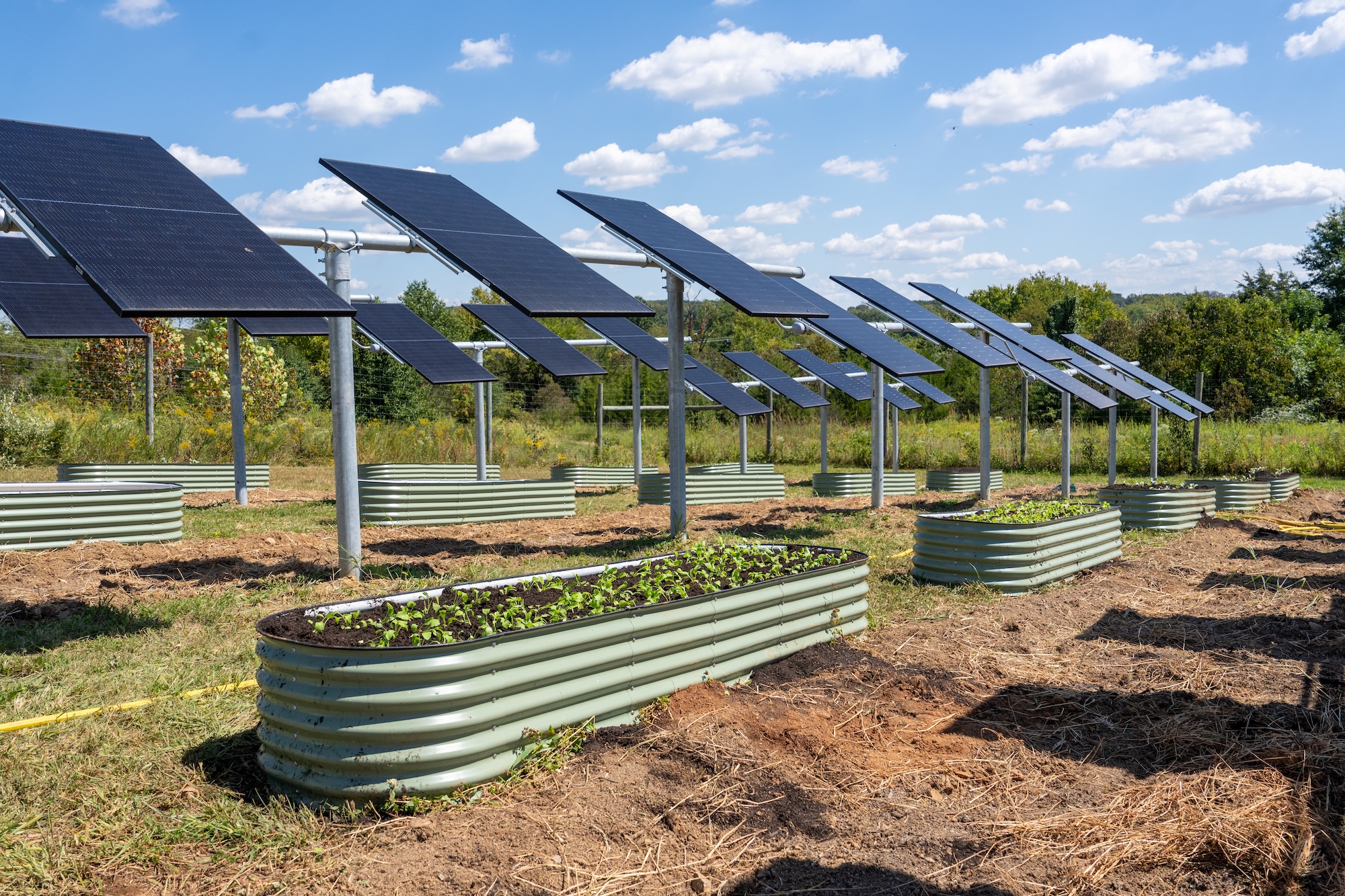
A small agrivoltaics solar installation at PEC’s Community Farm that is the first in Virginia to grow crops under panel. Photo by Hugh Kenny
Dominion’s attack on distributed generation
So why — and how — is Dominion attempting to destroy the viability of a seemingly ideal form of energy generation? Simply put: money.
Most monopoly utilities make maximum revenue from centralized generation — like gas plants and large-scale solar — and energy infrastructure like transmission lines. Motivated by profits, Dominion’s tremendous lobbying pressure has been a longstanding and powerful force against efforts to create a more distributed grid.
So, at a time when:
- Virginia imports more energy than any other state;
- our electricity bills are predicted to double in the coming years;
- data center-driven demand has pushed our grid to the breaking point and is forcing new, enormously expensive infrastructure; and
- data centers are polluting our air with high-emission diesel generators…
…Dominion is now proposing regulatory changes to net metering that will make distributed generation economically unviable.
Also known as “net energy metering” or NEM, net metering is a billing arrangement where customers who produce more energy than they use receive credit for excess energy that is sent back to the grid. Net metering is how solar installations “pay for themselves” after a certain amount of time, and what makes solar financially accessible to homeowners and small businesses.
How it works: If you have a rooftop solar installation on your property, when the sun is shining, the energy your panels produce is directly powering your home. Any excess energy that cannot be used in that moment goes back into the greater grid, and you get full credit for each unit produced. That credit is automatically applied later, perhaps to your evening usage or in the winter months when there is less sun. Those credits are good for an entire year.
In May 2025, Dominion petitioned the State Corporation Commission to cut that credit value by nearly half and increase the calculation frequency. These changes will severely undercut the value and practicality of rooftop solar to its owner and critically hamper distributed generation at a time when we desperately need every last electron.
PEC’s support for distributed generation
PEC is committed to shaping and advancing Virginia’s clean energy future, while also continuing to work hard to conserve and restore the Piedmont’s lands and waters. To this end, we have commissioned a “value of solar” report that demonstrates the true value of solar to every Virginia citizen: how rooftop solar and other distributed generation support conservation values and reduce the impacts of transmission lines, new large-scale generation, and other costs borne by ratepayers on their electricity bills. The report will factor in the range of benefits that utilities do not acknowledge when proposing their reductions in net metering values.
Once complete, the value of solar report will lay the foundation for PEC’s intervention in Dominion’s net metering case with the SCC, as well as future local and state policy that can advance distributed generation. We will join Sierra Club, Solar United Neighbors, Clean Virginia, and Vote Solar to argue that the state retain its current net metering rates.
But we need your help. Early in 2026, this case will provide a tremendous opportunity for you to get involved through public testimony and public comment. Our upcoming value of solar report and related communications will give you the tools to express your support for keeping net metering rates as they are.
Whether you already have solar or plan to get it, or are motivated by conserving natural resources and agricultural and forested lands, your unique voice can play a tremendous role. Stay tuned for more information later this year so you can join the fight and help us expand, rather than diminish, the role of distributed generation in Virginia’s energy future.
This article appeared in the 2025 fall edition of The Piedmont Environmental Council’s member newsletter, The Piedmont View. If you’d like to become a PEC member or renew your membership, please visit pecva.org/join.