
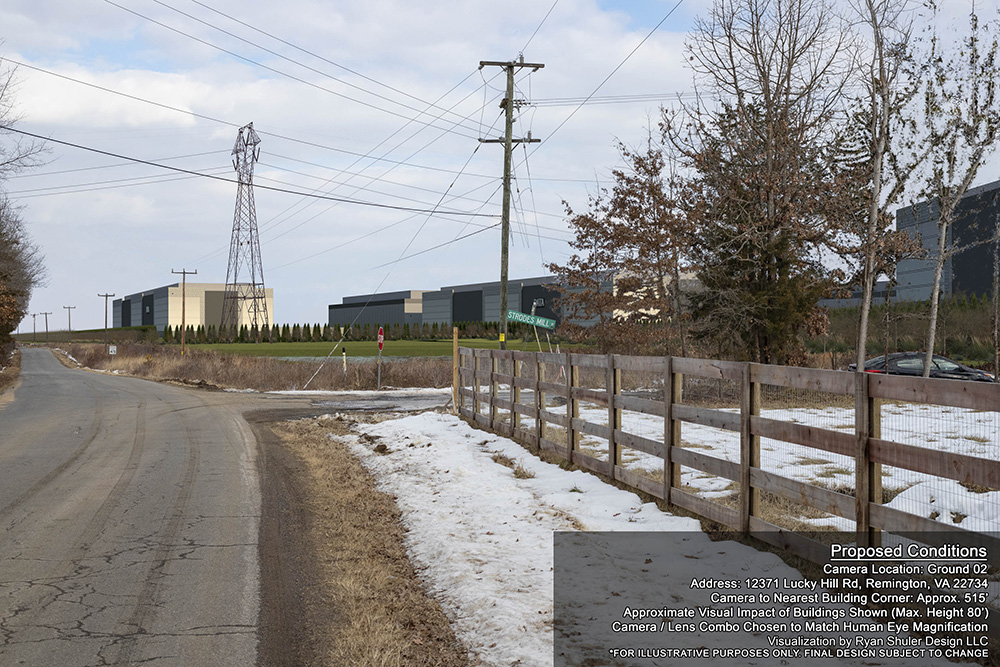
A massive data center complex known as Gigaland is being proposed in Remington, at the southern end of Fauquier County, Virginia. The Piedmont Environmental Council (PEC) opposes the outsized development, which we believe will overwhelm the town; open the door for more data centers and transmission lines, strain electricity and water supplies in Fauquier; and contribute to air, noise and water pollution.
On June 18, 2025, the Fauquier County Planning Commission voted 4-1 in opposition to Gigaland. Although this recommendation to deny is a positive result, the Board of Supervisors may still approve this project at its scheduled Board meeting on Sept. 11.
If you have concerns about this project, the speed at which it is advancing, and the lack of key information about its impacts, it is critically important for the Board to hear your concerns before it votes. Send a letter to the Board now →
Read on to learn more about the Gigaland data center project and its potential impacts on Remington and Fauquier County.
Download a PDF version of this Fact Sheet →
Gigaland is the largest proposed single development in Fauquier County – ever.
- Gigaland is a proposed data center complex that, if approved, would occupy 200 acres on Lucky Hill Road in Remington, VA and encompass 2.2 million square feet, the equivalent to 12 Walmart Supercenters.
- The current proposal includes seven 80-foot tall data center buildings, four substations and a 95-foot tall water tower.
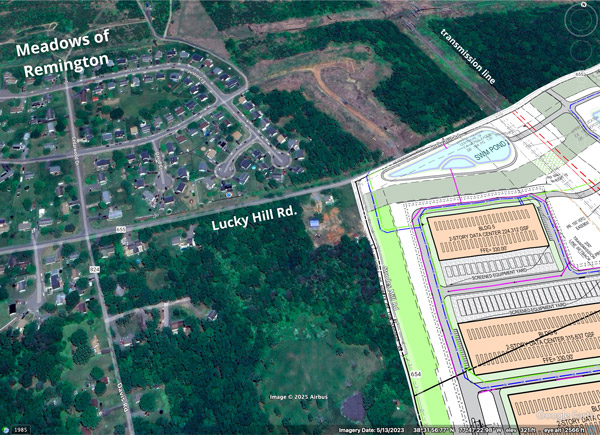
- The Gigaland complex would stand less than 500 feet away from the nearest home.
Gigaland will cause years of traffic disruptions and related construction headaches.
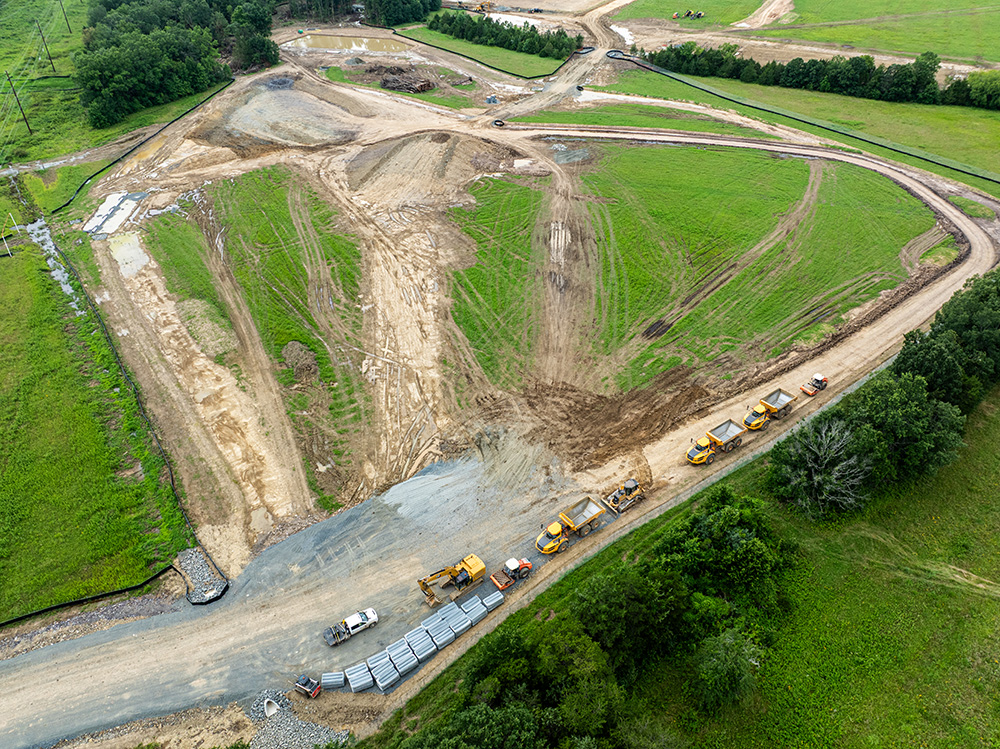
- Remington, Fauquier County and Culpeper County residents will face years of construction and traffic disruptions from dump trucks hauling dirt from the site, which will damage local roads and make them more dangerous.
- Due to the prevalence of shrink-swell soils (heavy clays that are difficult to build on) and shallow bedrock, a significant amount of material may have to be removed – and potentially more stable dirt brought in – to support the construction of a data center. Because of this, there will be large volumes of heavy dump truck traffic. Fauquier County is already dealing with dump truck traffic from data center sites in Prince William County, and the construction of the previously approved Remington Tech Park will add even more traffic.
- The traffic study Gigaland developers submitted as part of its application doesn’t account for the considerable traffic that will be created during its long construction process. In addition, the report estimates that after the facility has been built and is up and running, traffic along Lucky Hill Road will increase by more than 400% as a result of Gigaland.
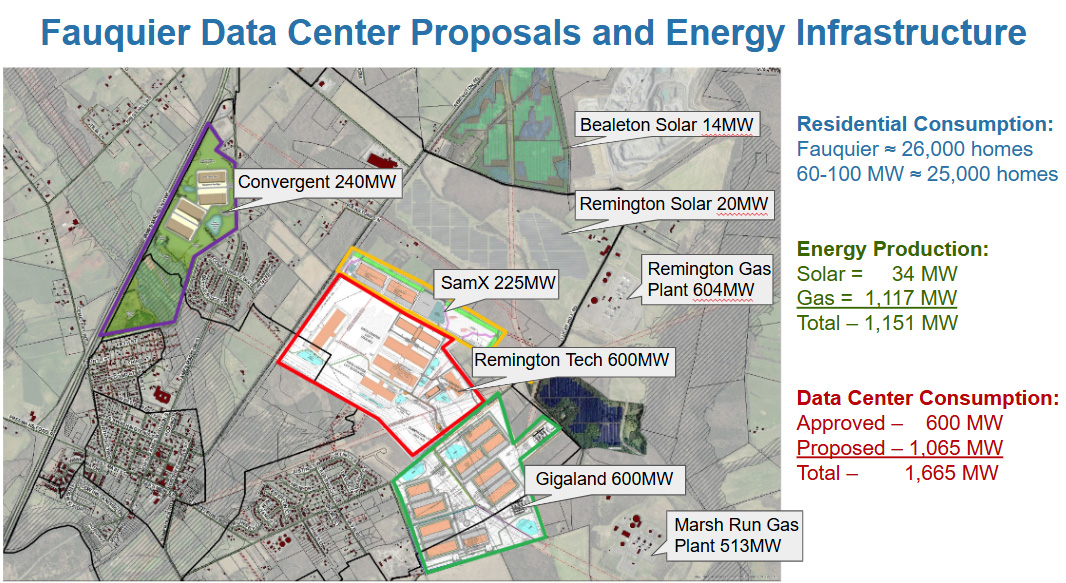
- If approved, Gigaland would be the largest of several data center construction projects that would likely be underway in Remington, meaning the traffic impact will be multiplied beyond just the Gigaland project. Other proposed data center projects include SAMX, Convergent, and Remington Innovation Campus. Remington Technology Park, a data center complex with six large scale buildings that was approved in 2018, has already begun construction.
Gigaland will have major negative impacts on the environment, noise, health and well-being.
- At less than 500 feet from the nearest home, Gigaland will undoubtedly impact the quality of life of residents through air, noise and light pollution. It will also compete with homes for power and water and drive up those costs.
Light pollution:
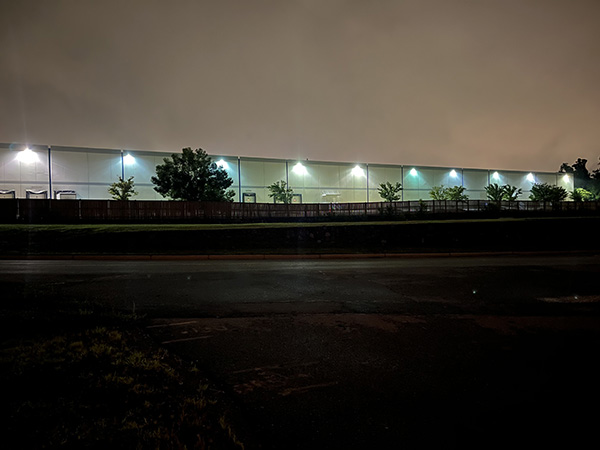
- Data centers are lit at night (for security purposes), often with LED lights, which can be very impactful to night skies. This may be less noticeable in urban areas where there is already a high amount of light pollution, but can be extremely disruptive in rural areas that are naturally darker. Light pollution near neighborhoods can negatively impact the health and well-being of the people and wildlife that live there.
Noise pollution:
- The noise limits proposed by Gigaland are higher than those recommended by both the EPA and the WHO.
- Noise pollution has been proven to cause sleep disruption, cardiovascular disease and reduced quality of life, among other maladies. Recently, the Joint Legislative Audit and Review Commission (JLARC) study on data centers, specifically recommended that localities avoid allowing data centers near residential areas because of conflicts like noise. Similar to light, noise from data centers in rural areas is also likely to be more noticeable because the background noise is naturally much quieter.
Air pollution:
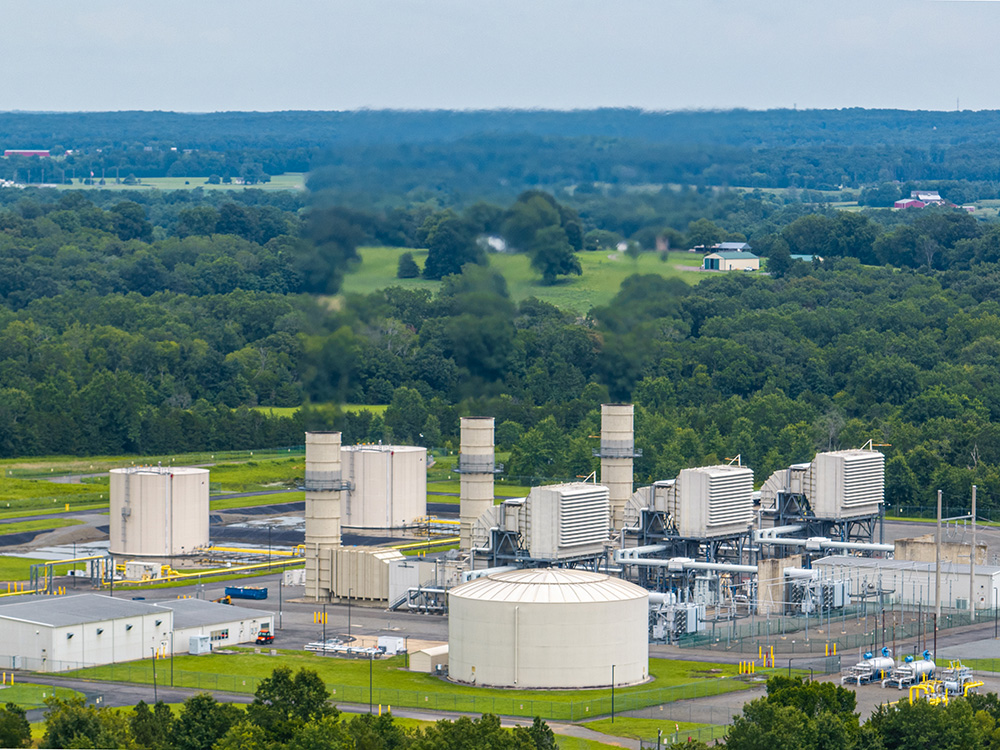
- To power their servers, data centers use large backup generators, which emit nitric oxides (NOx) and nitrogen dioxide (NO2) – byproducts of burning fuel that contribute to air pollution (specifically particulate matter and ozone) which in high concentrations, can cause health problems such as respiratory issues and asthma. Based on its size, we estimate Gigaland will require 250 generators.
- Hyperscale data centers are driving the development of new gas plants and delaying the closure of fossil fuel-burning power plants, contributing to greenhouse gas emissions and taking Virginia further and further away from important climate change goals.
Gigaland will lead to more transmission lines.

- Gigaland developers have claimed this project will not call for any new transmission lines. However, regional utility provider PJM estimates the transmission lines leading to Remington from both the west and the south will be overloaded to the point of voltage collapse during summer peak loads in 2029 (see slides 10, 16 of the PJM Reliability Analysis Update, July, 2024), meaning any additional power demand will require new transmission lines. The region already nearly ran out of power in July 2025 during a heat wave, which combined with rising energy demand, taxed the grid at one point to 97% of the available power.
- The massive energy demand of data center projects like Gigaland will lead to transmission lines far beyond the footprint of the data center. With the addition of Gigaland, as well as the potential for other proposed data center facilities in Remington, the need for more transmission lines and additional right-of-way through private property in southern Fauquier County, is all but guaranteed.
- More substations will then need to be built (Gigaland alone has proposed four), which will increase the likelihood that future lines will be routed through the Fauquier (as well as neighboring Culpeper and Rappahannock) to power data centers in Prince William and Loudoun counties.
Hyperscale data centers like the proposed Gigaland project consume vast amounts of energy, which is causing residents’ energy bills to go up.
- Gigaland alone would consume enough power to supply 150,000 homes, and that’s a conservative estimate.
- According to a report by Virginia’s Joint Legislative Audit and Review Commission (JLARC), growing energy demand in Virginia driven by data centers has already or soon will impact residents in the form of higher electricity bills.
- Dominion Energy has 40 gigawatts of data center capacity requests currently in various stages of contracting, which is triple the current maximum energy production for the entire state of Virginia. Currently, residents share the cost burden for that additional energy capacity, even though it is purely for the data centers.
- Approving new data centers perpetuates a cycle in which the wealthiest corporations in the world are being subsidized by Virginia ratepayers without their approval and without receiving any benefit.
Read more → The SCC Must Protect Ratepayers From Big Tech’s Skyrocketing Energy Bill
Approving data centers does not guarantee tax revenue or job opportunities for Remington.
- The promise of increased tax revenue is the primary reason some towns and counties are interested in data centers. Yet, there is no guarantee that Remington will see any tax revenue collected by the County from these data centers. Given that construction and buildout of the Gigaland facility could take years, revenue projections are also highly speculative, at best. Further, it is difficult to predict what equipment and technology may be used or how rules around taxation of property, depreciation, and data centers in general will change.
- Any eventual tax revenue would be broadly dispersed throughout the County and would not be set aside for Remington, per se. However, the long-term negative impacts, including lost opportunities to attract other industries that would diversify and strengthen the local economy, especially local businesses and agriculture, would directly affect the people and town of Remington.
- Many people mistakenly believe data centers bring many job opportunities, but in reality, data centers don’t employ large numbers of people and the developer of Gigaland will likely hire temporary construction workers, and eventually its handful of full-time operators, from outside the region.
Data center development in Remington likely will not end with Gigaland.
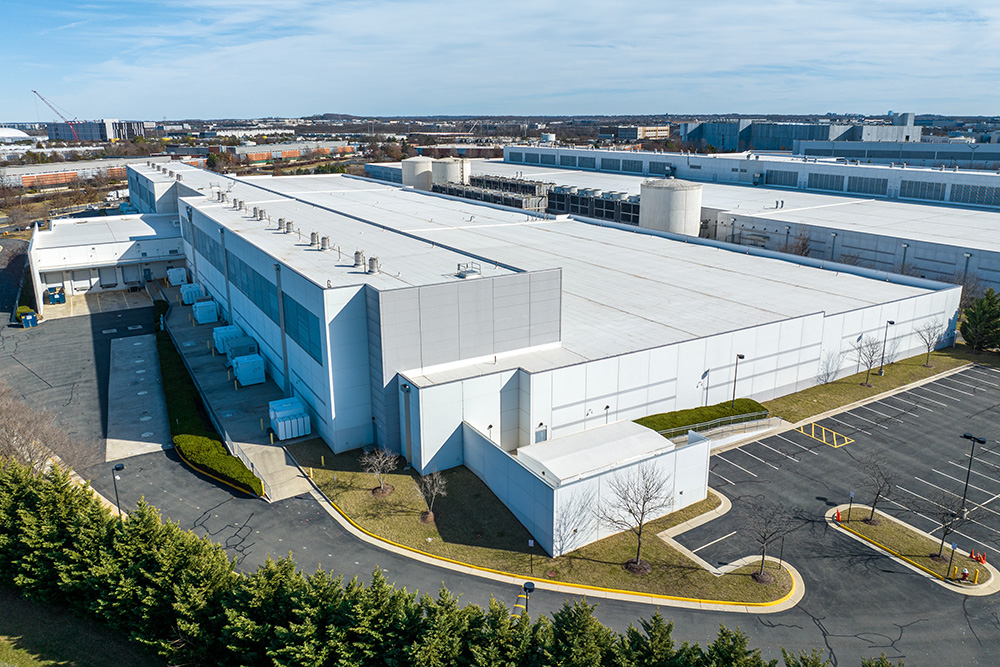
- If the County shows a willingness to allow rezonings, other properties will likely seek to develop data centers in southern Fauquier, opening the door to more (and their corresponding transmission lines and substations), and there will be no stopping it.
- We have seen a similar repeating cycle in Loudoun and Prince William counties, a type of development that will quickly overwhelm a small town like Remington, affecting quality of life and home values and quashing future economic growth opportunities. If the AI boom doesn’t materialize, it could cause much more harm than good to Remington’s already fragile economic state.
Tell the Board not to believe developers’ empty promises and to reject the Gigaland proposal. Send a letter to the Board now.